
Anti-Breakage Hair Serum OEM: Count Broken Fibers Before Writing Claims
Source an anti-breakage hair serum with a defined test brief. Compare broken fibers, combing effort and routine controls before approving product claims.
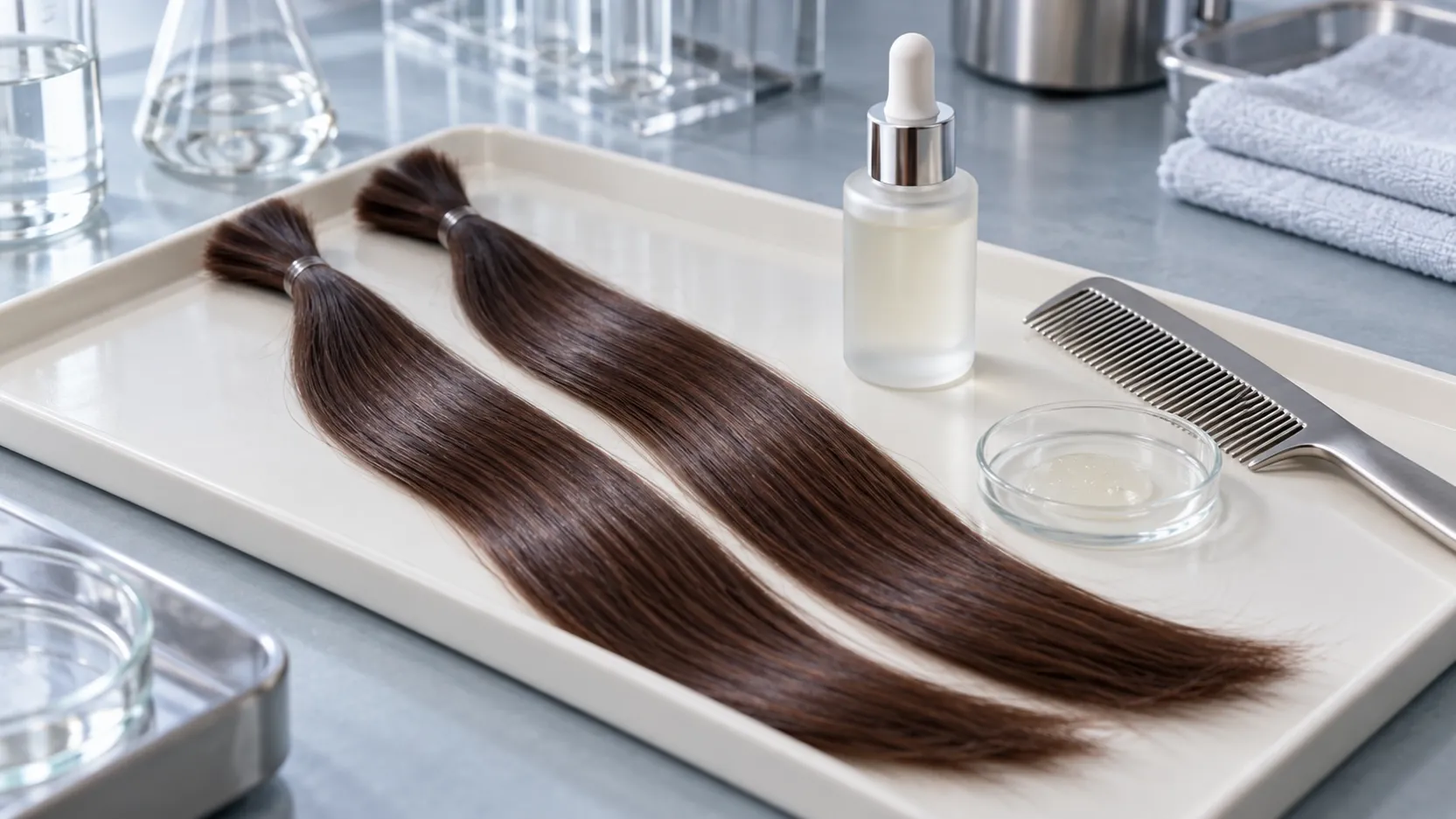
Approve an anti-breakage serum against a defined broken-fiber endpoint, a relevant routine comparator and documented use conditions. Easier combing and a smoother feel can be useful secondary outcomes, but they should not stand in for a measured reduction in breakage.
Why this procurement question matters now
Nutrafol's September 30, 2026 strand-serum announcement makes breakage a prominent treatment benefit. That is a current positioning signal, not evidence for another manufacturer's sample. Source: dated brand announcement.
Buyer inference: suppliers may receive more briefs using the same benefit language. The useful response is a precise assessment plan. Ingredient names, texture and a competitor's result cannot establish the result of the proposed finished formula.
Start by defining what will be counted
Ask the testing provider how it identifies a broken fiber, collects fragments and handles very small pieces. Establish whether the result is a count, mass or another measurement. Keep the definition unchanged across candidates.
A controlled hair-tress assessment is different from collecting loose hairs from a consumer's brush. If the project concerns breakage, the method must explain how the endpoint is distinguished from other material collected during grooming.
Keep separate questions separate
| Buyer question | Suitable assessment direction |
|---|---|
| Does the tested routine produce fewer fragments? | Defined breakage assessment |
| Is the hair easier to comb? | Combing-force or standardized grooming assessment |
| Does the hair feel smoother? | Blinded sensory comparison |
| Do users prefer the routine? | Structured user feedback |
This is a proposed procurement framework, not a published test standard or a claim that any sample has passed.
A practical comparative test brief
- Specify the target hair substrate, treatment history, tress mass and length.
- Randomize matched tresses into candidate, routine benchmark and relevant control groups.
- Define shampoo, rinse conditions, serum dose and damp or dry application.
- Use the same grooming tool, sequence and collection procedure for every group.
- Include independent replicates and have the provider justify the sample size.
- Report the underlying results and variability, rather than only a rounded percentage.
Where possible, blind the assessor to sample identity. Record deviations, exclusions and failed collections. Ask the laboratory to agree an analysis plan before results are available.
Compare the complete routine fairly
If a sample is assessed after a conditioner while the control receives only shampoo, the comparison answers a routine question. It does not isolate the serum's contribution.
For a serum-only comparison, keep the base routine equal and change the serum step. If the intended commercial claim concerns a coordinated set, test that set and describe the comparator accurately. Neither approach is automatically superior; the intended claim determines the relevant design.
An illustrative reduction calculation is: (control result minus candidate result) / control result × 100. Use it only when the endpoint and control support that calculation. A near-zero control can make a percentage unstable, so ask for absolute results and uncertainty as well.
What should go into the approval file?
Keep the formula version, packaging, dose instructions, substrate specification, test report and approved wording together. If formula, dispensing or directions change, review whether the existing evidence still represents the product being sold.
A test brief should also reserve room for practical failures: excessive residue, poor distribution or an unpleasant finish can prevent consumers from using the tested dose. Do not approve a performance claim while ignoring the routine that makes the result possible.
FAQ
Is reduced combing force enough to claim less breakage?
It answers a different measurement question. Use an endpoint that supports the actual breakage wording.
Can a supplier borrow a competitor's percentage?
No. Require evidence for the finished product or defined routine being supplied.
Should every hair type be combined in one result?
Only if the design and intended claim justify it. Separate target groups when their responses matter to the buying decision.
Related products and Contact
Review the anti-frizz care system with serum or the leave-in repair-mask concept as development starting points. Product names do not replace performance evidence.
Contact the OEM team with the target hair substrate, current benchmark, application directions, intended claim and pilot quantity. Request a finished-product test proposal and an itemized development quote.