
Body Lotion OEM: Screen Pilling in a Layered Body-Care Routine
Evaluate body lotion OEM samples in a layered routine. Control dose, waiting time and rubbing to identify visible pilling before approving a formula.
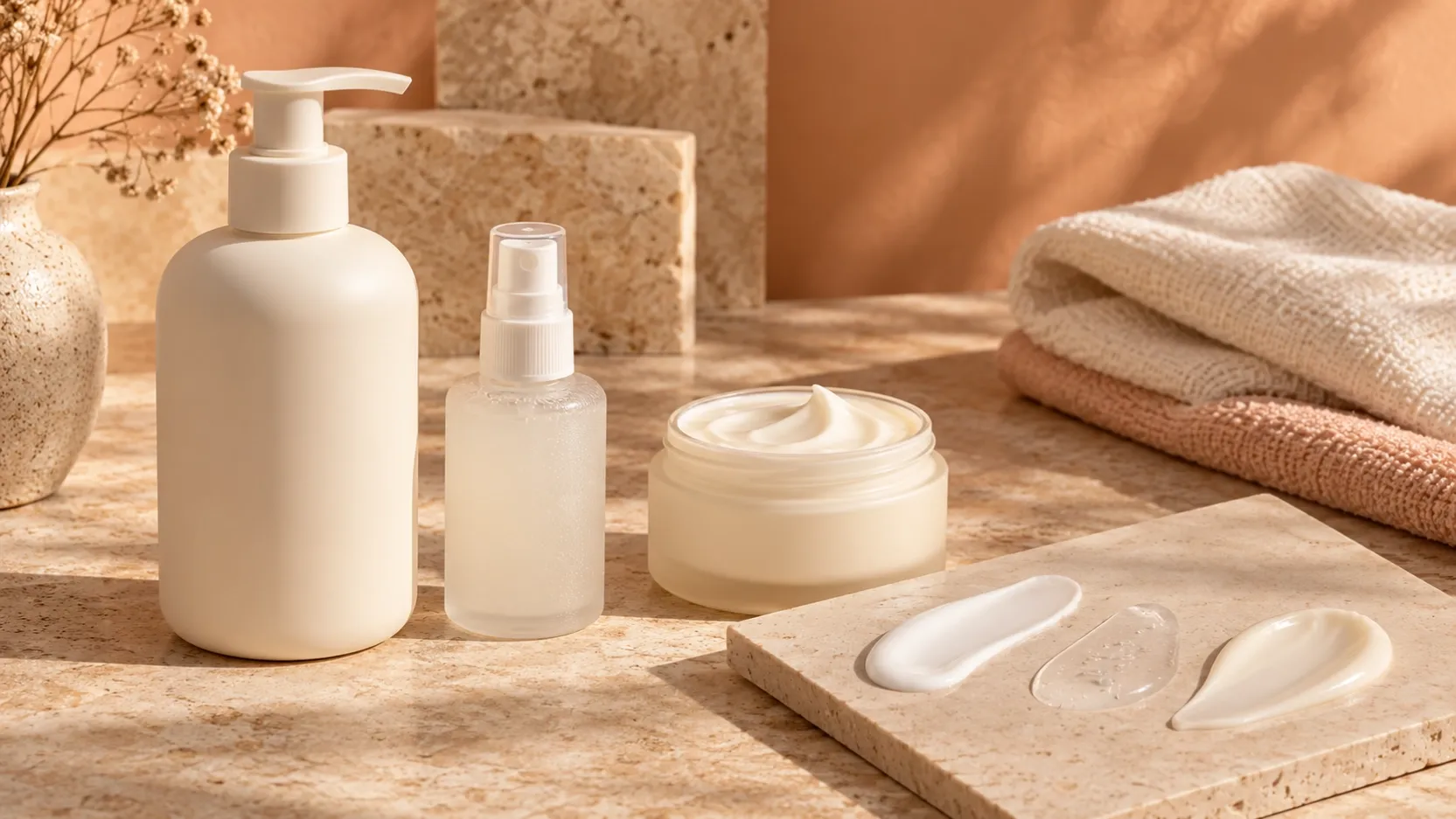
Screen a body lotion both alone and over its intended companion product, using fixed doses, waiting times and rubbing conditions. Record visible pilling separately from tackiness and clothing transfer so the formulator can identify which experience needs improvement.
The current product signal
VOESH's public Milky Body Serum Mist page describes using the mist before a body moisturizer. This is a verifiable example of a layered routine, not proof that body-care layering is growing at a particular rate. Source: official product page, reviewed October 4, 2026.
Buyer inference: a lotion intended for a two-step set should be approved in that set. An attractive standalone sample can leave unanswered questions about the combined use experience.
Define the complaint before testing
For this proposed screen, define pilling as visible rolls or particles formed during application. Define tackiness as a sticky after-feel and clothing transfer as visible material deposited on a fabric. These observations should have separate records.
Use reference photographs or descriptions to align assessors before comparing samples. Do not use an image of residue as proof of a specific ingredient incompatibility. The observation identifies a problem to investigate, not its cause.
Start with a controlled surface screen
A clean inert surface can help compare application behavior cheaply during development. It cannot reproduce skin or establish a consumer-use claim. Use it to eliminate obvious candidates, then assess the intended routine through an appropriately planned user evaluation.
A practical layering matrix
| Combination | Purpose |
|---|---|
| Lotion alone | Establish the standalone baseline |
| Companion serum or mist alone | Check the other step independently |
| Companion followed by lotion | Assess intended order |
| Intended order with a realistic shorter wait | Check hurried use |
| Intended order at a higher plausible dose | Identify a practical dose boundary |
Choose timings and doses from the intended directions and observed use. Values agreed for one project are not universal consumer instructions.
Keep application area, rubbing pattern and observation time consistent. If the assessor adds more product or rubs for longer, record that deviation rather than treating it as the same condition.
Interpret a failure without guessing the cause
If pilling appears only in the pair, ask the formulator to review the combined film and application behavior. If it appears with lotion alone, return to that baseline first. Changes in dose or waiting time may clarify the issue but should not be used to conceal an impractical routine.
Where appropriate, compare a revised formula against the previous version under the same conditions. Adjust one development variable at a time when possible. Keep the sample code and revision history attached to the scorecard.
A “no pilling” promise across every product a shopper might own would be broader than a small pairing test. Report what was actually assessed.
What should buyers approve?
Approve the formula, companion SKU, pack dose and directions together. Ask whether the recommended amount is easy to dispense and whether the wait feels realistic. A successful laboratory procedure that users cannot follow is a poor foundation for a retail routine.
For clothing contact, run a separate assessment with agreed fabrics and observation conditions. Visible residue, pilling and staining are different decisions. Also keep safety, preservation, stability and claim-support work in the development plan; this usability screen does not replace them.
Hair-first brands can use this method for a controlled body-care extension without adding a large assortment. Begin with one coherent pair and clear instructions.
FAQ
Does visible pilling prove that two ingredients are incompatible?
No. It is an observation. Dose, application and formulation need investigation before identifying the cause.
Can a bench surface test replace a user evaluation?
No. It is a preliminary screen, not evidence of the finished routine's performance on skin.
Should instructions require a long waiting time?
Only if the approved routine is practical and supported. Test realistic use before settling the directions.
Related products and Contact
Review the niacinamide body-serum reference and body-care development options. Ask which lotion base is suitable for the intended pair; do not assume every catalog formula is interchangeable.
Contact the OEM team with your companion SKU, intended order, finish preference, pack size, market and quantity. Request a paired sample screen before approving the set.