
Sep 19, 2026News & Insights
Clarifying Shampoo + Lightweight Scalp Serum OEM: Build a Scalp-First Hair Care System
A buyer guide to building a scalp-first clarifying shampoo and lightweight serum system, covering cleansing strength, texture, applicators, claims, testing and MOQ.
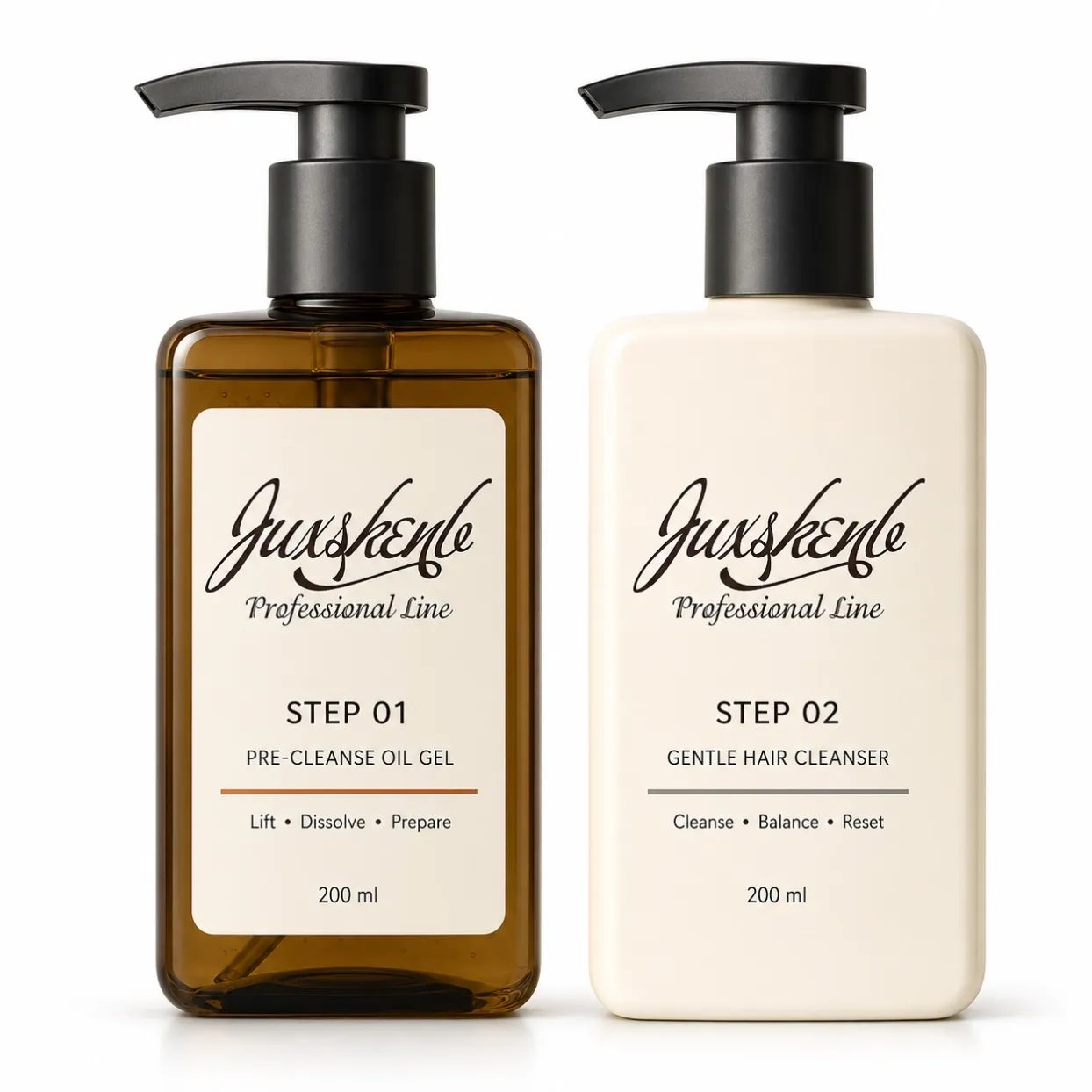
Scalp-first hair care is moving beyond one anti-dandruff shampoo. A stronger OEM system pairs a controlled clarifying cleanser with a lightweight leave-on serum, giving brands one wash-day product and one repeat-use treatment with distinct roles.
Direct answer: what should each product do?
The clarifying shampoo should remove oil, styling residue and selected buildup without leaving the lengths unnecessarily rough. The scalp serum should apply precisely, absorb quickly and support daily scalp comfort without heavy oil or visible residue. Claims must follow the actual formula and evidence.
1. Define what “clarifying” means
Clarifying can refer to sebum, styling polymers, dry-shampoo residue, environmental dirt or hard-water minerals. These are not the same target. The buyer should specify the main buildup problem before choosing surfactants or chelating ingredients.
A hard-water or metal-reset claim needs formula design and appropriate testing; ordinary cleansing alone does not prove removal of specific minerals.
2. Balance cleansing with hair feel
Compare foam, rinse speed, root freshness, wet combing and the feel of the lengths after drying. If the target customer has color-treated, curly or chemically processed hair, testing should include those hair types.
A clarifying shampoo can be positioned for periodic use while a milder balancing shampoo supports frequent washing.
3. Choose a lightweight serum format
A water-serum or light gel-serum can suit daily application when buyers want a non-greasy finish. Define absorption time, tack, root shine, flaking and compatibility with styling products.
Potential ingredient stories may include niacinamide, caffeine, panthenol, peptides, botanical extracts or other scalp-conditioning materials, but every addition must fit stability and claim requirements.
4. Keep scalp-care claims cosmetic
Useful cosmetic language includes helps maintain a comfortable scalp, supports moisture balance, refreshes roots and improves the appearance of fuller-looking hair. Avoid treatment language for hair loss, inflammation or scalp disease unless the product has the necessary evidence and regulatory route.
5. Select the applicator by routine
Pointed nozzles allow section-by-section application. Droppers provide visible dosing, while treatment pumps can improve repeatability. Test leakage, clogging, dose and contact hygiene with the actual formula.
Standard cosmetic nozzles and droppers also provide clearer external-use positioning than syringe-like packaging.
6. Make the two products work together
Test the serum after the clarifying shampoo and after the buyer’s normal conditioner. Record scalp feel, residue, hairstyle volume and next-day appearance. If the shampoo is used weekly, the serum directions should explain whether it is daily or wash-day only.
7. Plan retail and professional sizes
A 250–300ml shampoo plus 50–100ml serum suits retail and ecommerce. Salon or distributor projects may add a 1000ml shampoo once professional demand is validated. Keep design cues coordinated while making directions and net content easy to read.
8. Use MOQ language accurately
MOQ starts from 100 pcs per SKU for selected stable formulas using in-stock bottles. Custom formulas, colors, fragrances, and packaging are quoted based on project requirements.
A custom scalp serum with specified active levels may require a larger formula batch than a mature shampoo. Quote the two SKUs separately before presenting them as a set.
9. Build an evidence and document plan
Confirm the final INCI, specification, pH, viscosity, preservation, stability and package compatibility route. Ask what COA, SDS/MSDS, GMP or ISO 22716 support and batch information will be available for production.
For mineral-removal, dandruff, shedding or growth-related claims, define the supporting test before artwork is approved.
10. Create useful content for each step
Shampoo content can show foam, rinse and root freshness. Serum content can show sectioning, applicator control, absorption and non-greasy finish. The demonstrations should show real use without making untested medical promises.
Buyer FAQ
Can the serum replace conditioner?
No. A scalp serum is a leave-on scalp step; conditioner primarily supports the hair lengths. Their roles are different.
Should clarifying shampoo be used every day?
Not necessarily. Frequency depends on cleansing strength, hair type, buildup and directions for the final formula.
Can the system be sulfate-free and silicone-free?
These directions can be developed, but the exact formula, performance and definition of each free-from claim must be agreed.
Can both products start at 100 pieces?
Selected stable formulas with stock packaging may start from 100 pieces per SKU. Custom active systems and packaging are quoted separately.
Build a routine, not two unrelated SKUs
A scalp-first system works when cleansing and leave-on care have distinct, compatible roles. Contact our OEM/ODM team to discuss formulas, applicators, testing and MOQ.