Cosmetics Supplier Verification: A Buyer Checklist After Counterfeit Warnings
Verify cosmetic supplier identity, manufacturing scope, sample versions and batch traceability before committing to a private-label order.
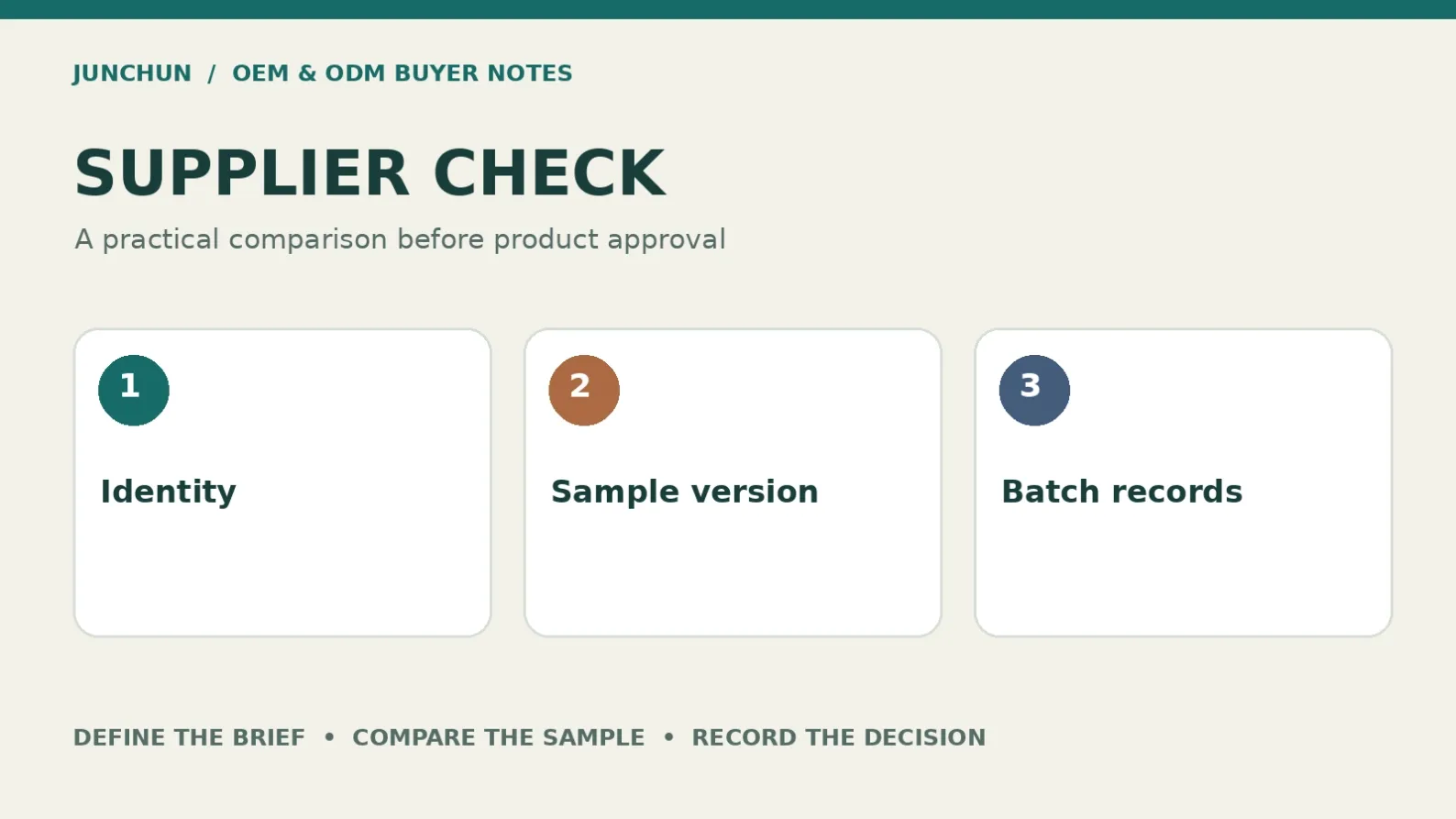
Verify the seller, manufacturer and specific product records as separate checks. A polished website, low price or certificate image alone does not establish that an approved formula and traceable batch will be supplied.
Why this check is timely
On 30 October 2026, the UK Intellectual Property Office published business guidance on avoiding fake beauty products. It advises checking supplier legitimacy and product traceability rather than relying on appearance or price. This is a current official sourcing warning, not an allegation against any OEM supplier. Private-label buyers can apply the underlying discipline to identity, documentation and incoming goods.
Match the business identities
Request the legal entity name, manufacturing address, seller details and the contractual roles of any trading company. Verify claimed certificates through the issuing body where possible, including scope, location and validity. If payment instructions change, confirm them using an independently established contact channel. A certificate for one site or activity should not be treated as proof of every process, product or destination-market requirement.
Make the sample traceable
Give each sample a reference linked to its formula version, fragrance, pack components and intended use. Compare the quoted product description with the approved sample. Ask which documents are available for early review, which are batch-specific and which require separate assessment or testing. Keep confidential technical information in an agreed disclosure process, including direct transfer to an appointed assessor where appropriate.
Connect order records to received goods
Before production, agree the specification, artwork version, batch identification, release documents and defect-reporting procedure. On receipt, check quantity, packaging integrity, batch codes and consistency with the agreed records. Keep dated photos and representative retained units. An unexplained discrepancy should be investigated before the stock enters a salon or retail channel. Do not equate one sensory check with a complete safety or compliance assessment.
Ask the questions that produce comparable quotations
List formula, pack, label, carton, testing, destination documentation and freight separately. Ask what is included and what remains conditional. For a changed bottle, printing or box, plan from 500 pieces per SKU subject to the component route; eligible mature formulas with stock bottles may support 100 pieces. Third-party testing and destination compliance are separately scoped. A cheaper quote is only comparable when its product and documentation scope match.
Buyer FAQ
Does a certificate image verify a supplier?
It is a starting point. Check issuer, scope, facility identity and validity, then connect the records to the intended order.
Should the COA match the batch?
A batch release record should identify the supplied batch and the agreed tests; clarify its scope before ordering.
Can a sample approval replace destination review?
No. Sample preference, manufacturing release and destination requirements address different questions.
References and project links
Send your target market, sales channel, product requirements, packaging and quantity to info@junchunbeauty.com for a project-specific sample and quotation review.