
Curl Cream and Styling Gel: Screen Layering Before a Small OEM Order
Screen curl cream and styling gel together with controlled doses, application order and drying conditions before approving a small private-label hair-care order.
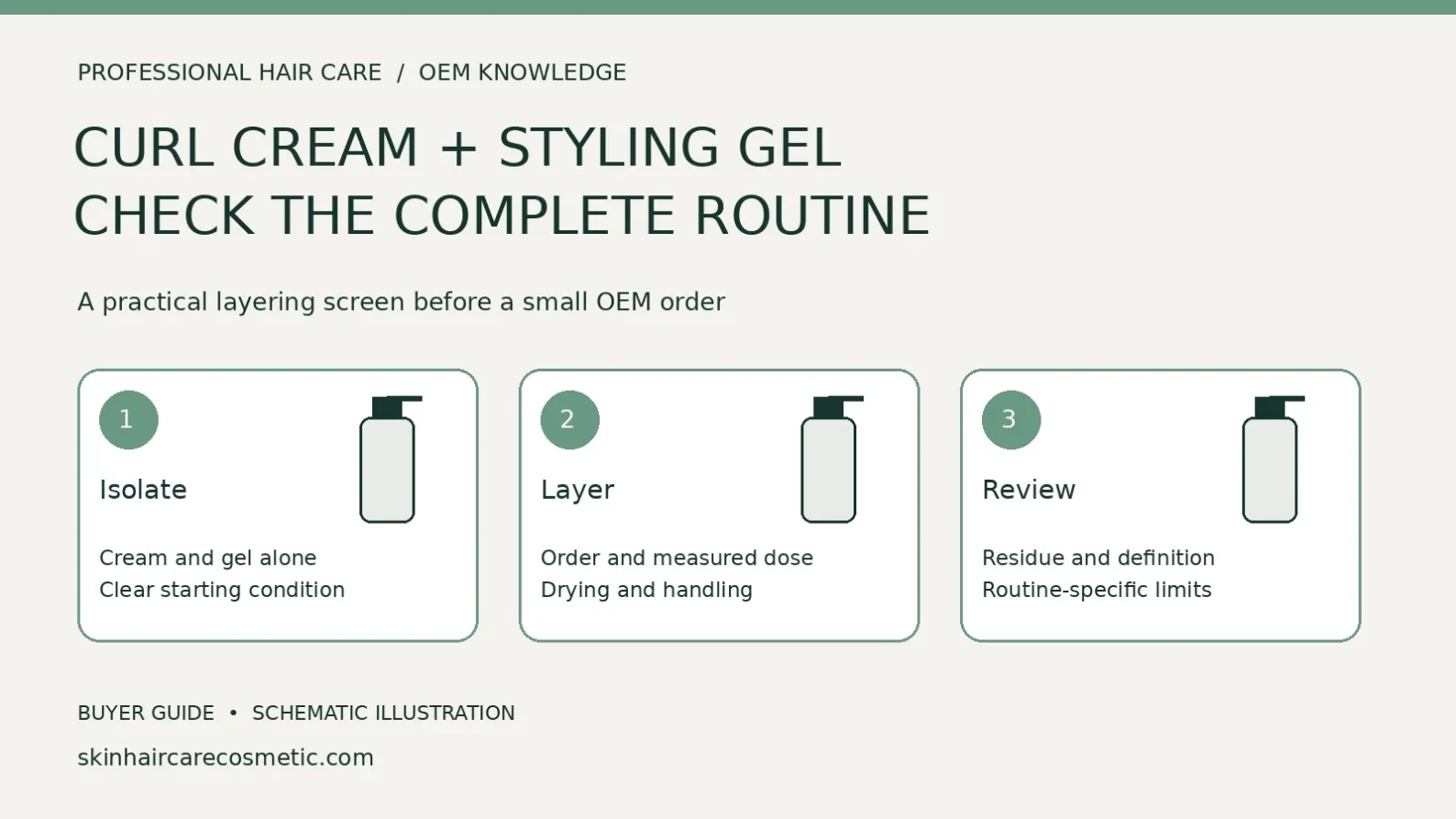
Direct answer
Screen a curl cream with the gels your customers actually use before approving a small private-label order. Compare each product alone, then the intended combinations at controlled doses and application orders. Record visible residue, feel and styling outcomes after drying. One disappointing combination does not prove that either product is defective, and one successful combination does not establish universal compatibility.
Why the routine matters more than a single attractive sample
A sample that feels pleasant in the jar may behave differently when distributed over damp hair and layered with another product. Treat the combination as an evaluation question, not a chemistry conclusion you can make from ingredient names alone. Request the intended use and the relevant formula versions before comparing results.
Cosmetics Europe's efficacy guidance, May 2008, checked 7 October 2026, distinguishes sensory and other study approaches. It provides methodological context. The following routine screen is our recommended sampling workflow, not a validated laboratory standard or a substitute for safety evaluation.
Build a small matrix instead of a random demonstration
Select a cream sample and a relevant benchmark gel. Record the condition and treatment history of the hair used. Apply the products according to suitable agreed instructions. Include cream alone, gel alone and the proposed layered sequence so an observation has a comparison.
Test a modest intended dose before exploring a higher dose, and keep the hair section and starting moisture state comparable. Agree who scores each observation. If every combination is applied to a different hair type by a different stylist, the results cannot fairly rank the formulas.
Use a clear record sheet
| Trial | Keep controlled | Observe after the defined drying step |
|---|---|---|
| Cream alone | Dose and application area | Spread, feel and unwanted deposit |
| Gel alone | Dose and application area | Definition, film feel and handling |
| Cream then gel | Both doses and distribution | Residue, feel and finish compared with controls |
| Alternative sequence | Same products, stated sequence | Whether instructions change the observed result |
Changing the application order is a diagnostic option, not a promise that all combinations can be corrected. Do not recommend a sequence that conflicts with the products' intended use.
Distinguish wet rub-off from dry residue
Record when an unwanted effect appears: while spreading, during drying, after touching the hair or after refreshing the style. Describe it plainly and take unaltered photographs. Wet rolling, dried flakes and an oily deposit are not identical observations and should not be combined into a single failure score.
Also record acceptable results. A visible cast may be part of the intended styling process for some users, while others prioritize a softer finish. Define what the product is meant to do before assuming that one feel is desirable for everyone.
If the test involves people, use suitable reviewed samples and stop for concerning reactions. A compatibility screen evaluates product use; it does not establish sensitive-scalp suitability or dermatological performance.
Diagnose one variable at a time
If the combination gives unwanted residue, repeat the observation with the same products at the agreed dose before changing the formulation. Review distribution, drying and any products already on the hair. Do not instruct the supplier to remove an entire ingredient family solely on the basis of one unrecorded trial.
If a problem recurs in a well-controlled comparison, send the supplier the full record and formula codes. The next sample could require a different mature formula, more suitable instructions or custom development. Ask which route is feasible and what changes would need further evaluation.
Approve the product and directions together
A small brand should keep a retained sample and a written formula reference. Confirm the pack, fill, dispensing route and approved application guidance. Selected mature formulas with stock bottles may begin from 100 pieces per SKU, subject to confirmation. Extensive formula changes or special packaging require a separate scope.
The pilot's instructions should describe a useful starting dose and sequence in terms customers understand. Avoid claims such as compatible with all gels, no flakes under any conditions or permanent curl repair. If the commercial benefit is a defined routine experience, collect evidence under that routine rather than making a much broader promise.
Keep the first order focused. Adding a second gel fragrance or several cream sizes can make feedback harder to interpret and create separate component commitments. Review available hair-care options to establish what can actually be sampled and ordered.
For related sampling, review the curl-cream development option. Evaluate the finished sample with the intended gel rather than inferring universal compatibility from the product page.
Buyer FAQ
Does residue mean the cream formula is unsafe?
Not by itself. Residue is a use observation; safety concerns require appropriate assessment and investigation.
Can ingredients alone prove that two products will layer well?
No. Evaluate the finished products under the intended routine.
Should every curl type share one acceptance result?
No. Describe the target group and avoid extending conclusions beyond the material or users evaluated.
Does this screen support an all-gels-compatible claim?
No. It supports decisions about the specific products and conditions tested.
Project discussion
Through Contact, send the target routine, cream and gel references, observed issues, pack preference and first-order quantity. Ask for eligible mature-formula options and suitable sample instructions before placing a small OEM order.