
Sep 1, 2026
Dual-Zone Hair Washing: Scalp Cleanse and Lengths Care OEM Guide
A private-label guide to building a two-step wash duo for oily roots and dry lengths using targeted cleansing, conditioning and coordinated packaging.
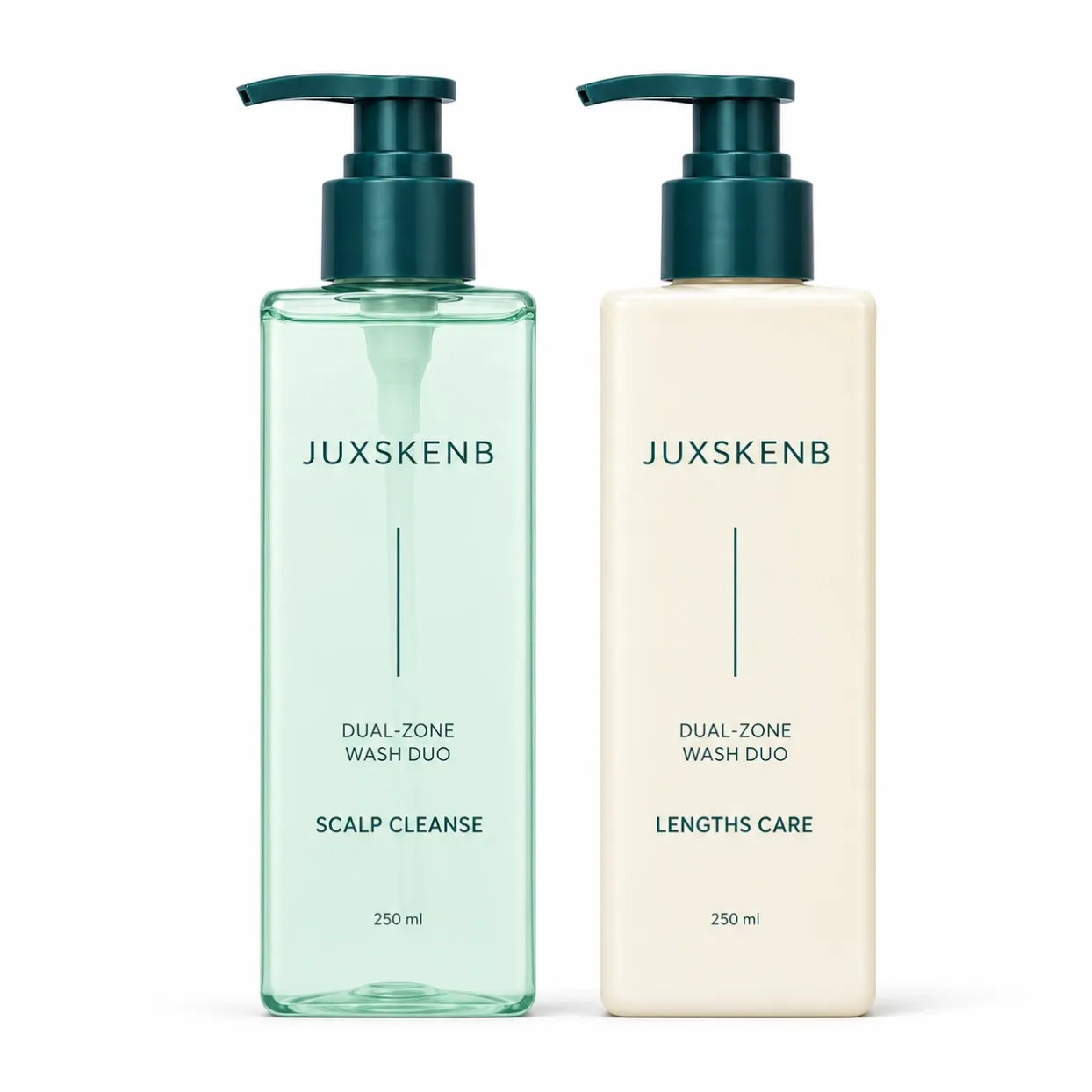
Related Product: https://www.skinhaircarecosmetic.com/products/private-label-dual-zone-wash-duo-scalp-cleanse-lengths-care
Dual-Zone Hair Washing: Scalp Cleanse and Lengths Care in One Routine
Many consumers describe the same contradiction: roots become oily or congested quickly, while mid-lengths and ends remain dry, colored, porous or prone to tangling. A single shampoo must compromise between two zones with different needs. A dual-zone wash system turns that conflict into a clear private-label product concept.
What is a dual-zone wash duo?
It is a coordinated two-product system. Scalp Cleanse is applied mainly to the roots and scalp. Lengths Care is applied through mid-lengths and ends. Both are rinsed in the same wash routine, but each formula is optimized for its application zone.
Why is one shampoo sometimes not enough?
A stronger cleanser may remove oil and styling residue from roots but leave compromised ends rough. A rich co-wash can improve slip but may not satisfy consumers with oily roots or heavy buildup. The problem is not necessarily a poor formula; it is asking one formula to solve opposing needs.
How should Scalp Cleanse be developed?
The root cleanser should focus on effective but controlled cleansing. Mild surfactant blends, adjustable oil-removal performance and optional chelating or refreshing ingredients can be considered. The final formula should be evaluated for scalp feel, sebum removal, buildup, rinse behavior and compatibility with frequent use.
How should Lengths Care be different?
The lengths formula should prioritize slip, reduced stripped feel, softness and manageability. Conditioning polymers, fatty alcohols, lightweight emollients and hydrolyzed proteins may be considered according to target texture. For color-treated positioning, tress testing should assess color change and fiber feel across repeated washes.
Commercial advantages for brands
• A visible two-step innovation with a simple consumer explanation.
• Higher average order value than a single shampoo.
• Strong set, gift and subscription potential.
• Clear customization by hair profile.
• Natural expansion into mask, serum and leave-in products.
Packaging strategy
Matched 250 ml pump bottles create a premium set and make dose differences easy to communicate. Color coding should remain clear but coordinated. A shared fragrance supports one collection identity, while complementary fragrances can emphasize the two-zone concept. Stock bottles reduce initial packaging risk; custom boxes and printing may require higher quantities.
Testing and compliant claims
Useful cosmetic claims include “targeted scalp cleansing,” “helps improve softness of lengths,” “designed for oily roots and dry ends” and “two-zone wash routine.” Testing can compare sebum removal at the root area, wet-combing through lengths, residue, color-treated tresses and consumer perception. Avoid treating scalp disorders or promising permanent repair.
Frequently Asked Questions
Must both products be used every wash?
Not necessarily. Usage frequency can be adapted to scalp oil, styling buildup and the condition of the lengths.
Can the duo be sulfate-free?
Yes, alternative surfactant systems can be developed and benchmarked for cleansing and sensory performance.
Can it address hard-water buildup?
A chelating direction may be added to the scalp cleanser, but mineral-removal claims should be supported by appropriate testing.
What is the low-MOQ route?
Selected mature formulas, stock bottles and waterproof labels may start from 100 sets, subject to formula and packaging availability.
How long does production take?
Typical private-label production is approximately 14–20 working days after samples, artwork, packaging and payment are approved.
Guangzhou Junchun Cosmetics supports formulation, coordinated packaging, labels and export documentation for dual-zone hair-care projects.