EU Leave-In Packaging in 2026: Check the Formula Before Ordering Printed Stock
Review an EU leave-in formula before ordering long-life printed packaging. Identify D4, D5 and D6 questions and keep the approved specification traceable.
JunChun Beauty Editorial Team · Updated 23 October 2026
Direct answer: Before committing to printed EU leave-in packaging, ask for the exact formula’s D4, D5 and D6 assessment and planned market dates. Use a qualified market review; “silicone-free” and “ECHA approved” are not substitutes for it.
Ask a product-specific question
Commission Regulation (EU) 2024/1328 updates REACH entry 70 for D4, D5 and D6, with a later application date after 6 June 2027 for the relevant cosmetic category source source. Ask the market reviewer to check the exact formula, category and applicable provisions before a print order. This is a restriction on named substances, not a blanket prohibition of all silicones.
Keep packaging decisions connected
If a sensory base changes, confirm whether INCI, instructions or claim support also change before printing labels. Retain the formula revision and label version together. A last-minute ingredient change can affect more than a single line of artwork.
Order against a realistic selling plan
Discuss the expected launch and stock period with the responsible regulatory party. Choose a labeling and pack route that leaves room for necessary review. This is inventory planning around a defined formula, not a guarantee of EU compliance from a blog article.
Create a formula-to-artwork record
Keep the selected sample code, formula revision, ingredient declaration, label file and pack reference together. Ask the manufacturer and responsible market specialist to identify the version covered by their review. When a sensory base or fragrance changes, revisit the affected records before approving another print run. This keeps a small brand’s limited stock useful and makes a later reorder easier to compare with the approved sample.
Use the sell-through plan in the packaging choice
Write down the target territory, planned shipment, expected first sale and reorder window. Bring any longer stock-holding period to the regulatory review. A smaller eligible stock-bottle and label route may preserve flexibility while the formula and market plan are settled. Compare it with the whole commitment for a decorated bottle, including any purchased components left unfilled; the relevant quantity is not always the number of filled units.
Ask focused questions about a proposed replacement
If the review calls for a change, specify the feel you want to preserve: quick spreading, controlled shine or comfortable dry touch. Compare the revised sample with your retained reference using the same amount and routine. Check the intended closure as well as the blend. Givaudan describes hemisqualane as one possible light-emollient alternative source, but a supplier ingredient description does not establish the behaviour or legal status of your finished formula.
Give the artwork approval a clear owner
Agree who approves ingredient wording and claims, who checks physical fit and legibility, and which file is sent to print. Retain that approved file with the purchase order. A manufacturer can support formula, packaging and export-document coordination, while the named responsible parties handle the relevant market review. Ask for specific responsibilities and deliverables rather than an undefined promise that a packaging order automatically includes every service.
A practical buying decision
| Decision point | What to request or compare |
|---|---|
| Formula | Request substance-specific supplier information. |
| Market timing | Review launch and stock plans. |
| Artwork | Match the approved formula and label versions. |
JunChun product and sample route
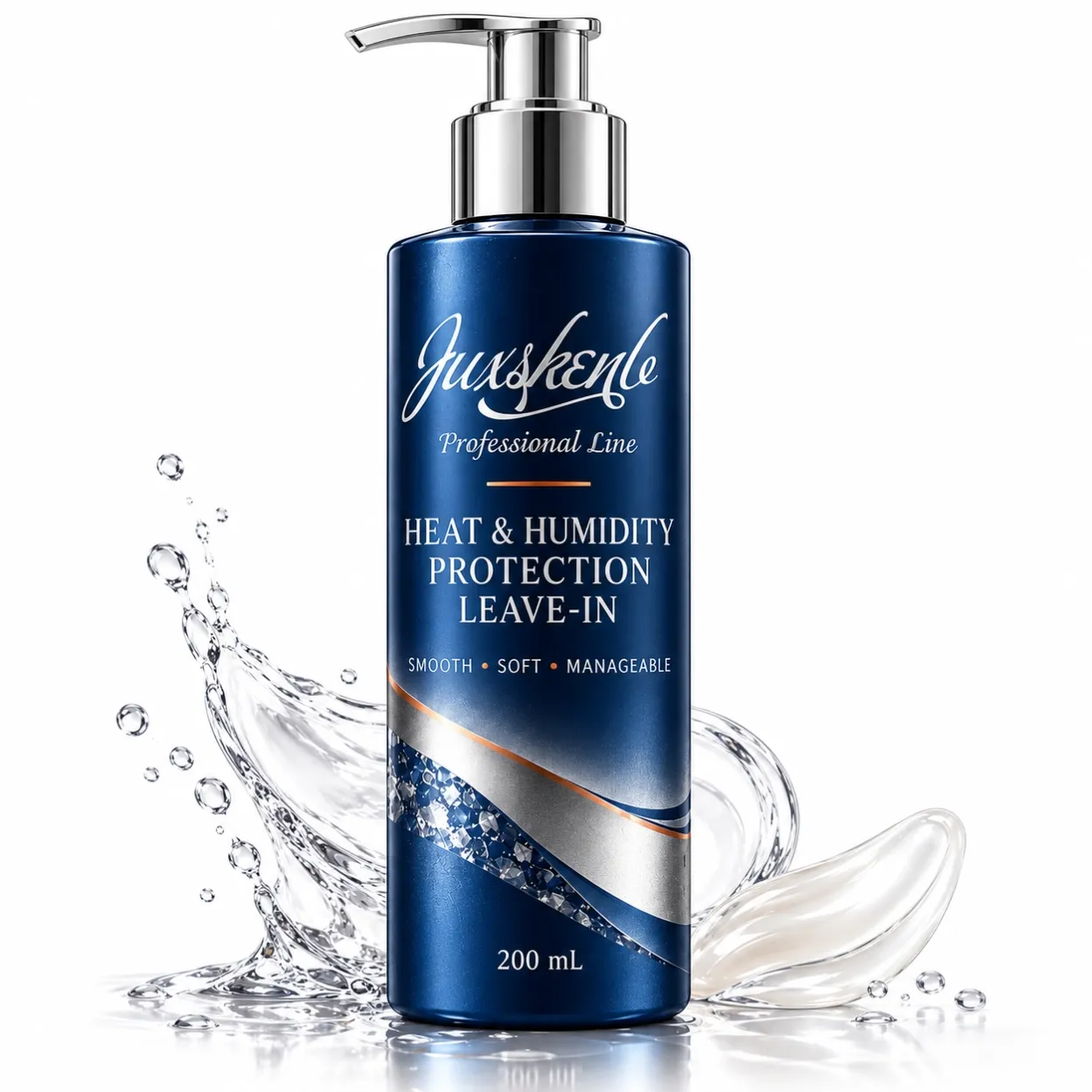
Start with JunChun’s Heat & Humidity Care Leave-In, a 200 ml pump-bottle reference for a professional leave-in project. Share the customer’s hair profile, styling sequence and preferred dry finish. JunChun can connect formula selection, sample comparison, packaging review and export-document coordination around that brief. Use the selected formula’s relevant evidence and final directions when agreeing the label.
Selected mature formulas with qualified stock packaging start from 100 pieces per SKU. Packaging changes start from 500, subject to component and process; formula changes and specialist packaging are confirmed separately. Compare the eligible current route with the requested changes at the same quantity.
Frequently asked questions
Is every silicone restricted by this rule?
No. Do not generalize restrictions on named substances to every silicone ingredient.
Should I use “ECHA certified” on the label?
Do not use an unsupported approval claim. Request the relevant compliance assessment and documentation instead.
What should I include in a sample enquiry?
Send your EU launch timing, current formula version and proposed label claims, destination country and planned quantity. Ask which current samples or development options fit those requirements.
Related products and manufacturing
Request a focused sample comparison
Send your EU launch timing, current formula version and proposed label claims, destination country and planned quantity. Ask JunChun which current sample fits the brief and what your requested changes add to the project. Send your project brief or email info@junchunbeauty.com.
Sources and scope
- Commission Regulation (EU) 2024/1328, Annex, entry 70 — Adopted 2024-05-16; published 2024-05-17.
- ECHA: REACH Annex XVII entry 70 restriction conditions — Current indexed text checked 2026-10-23; direct document fetch returned 403.
- Givaudan: Neossance Hemisqualane ingredient description — Publication date not displayed; checked 2026-10-23.
Sources checked 23 October 2026. Comparisons and procurement steps are editorial recommendations; brand and ingredient examples retain their own formula and study scope. Match the selected JunChun sample to its relevant project information and reports.