
Hair Fragrance Mist OEM: Score Scent and Hair Feel Separately
Build a hair fragrance mist OEM sample brief with separate scent, dry-down and hair-feel scores, controlled application and a clear approval decision.
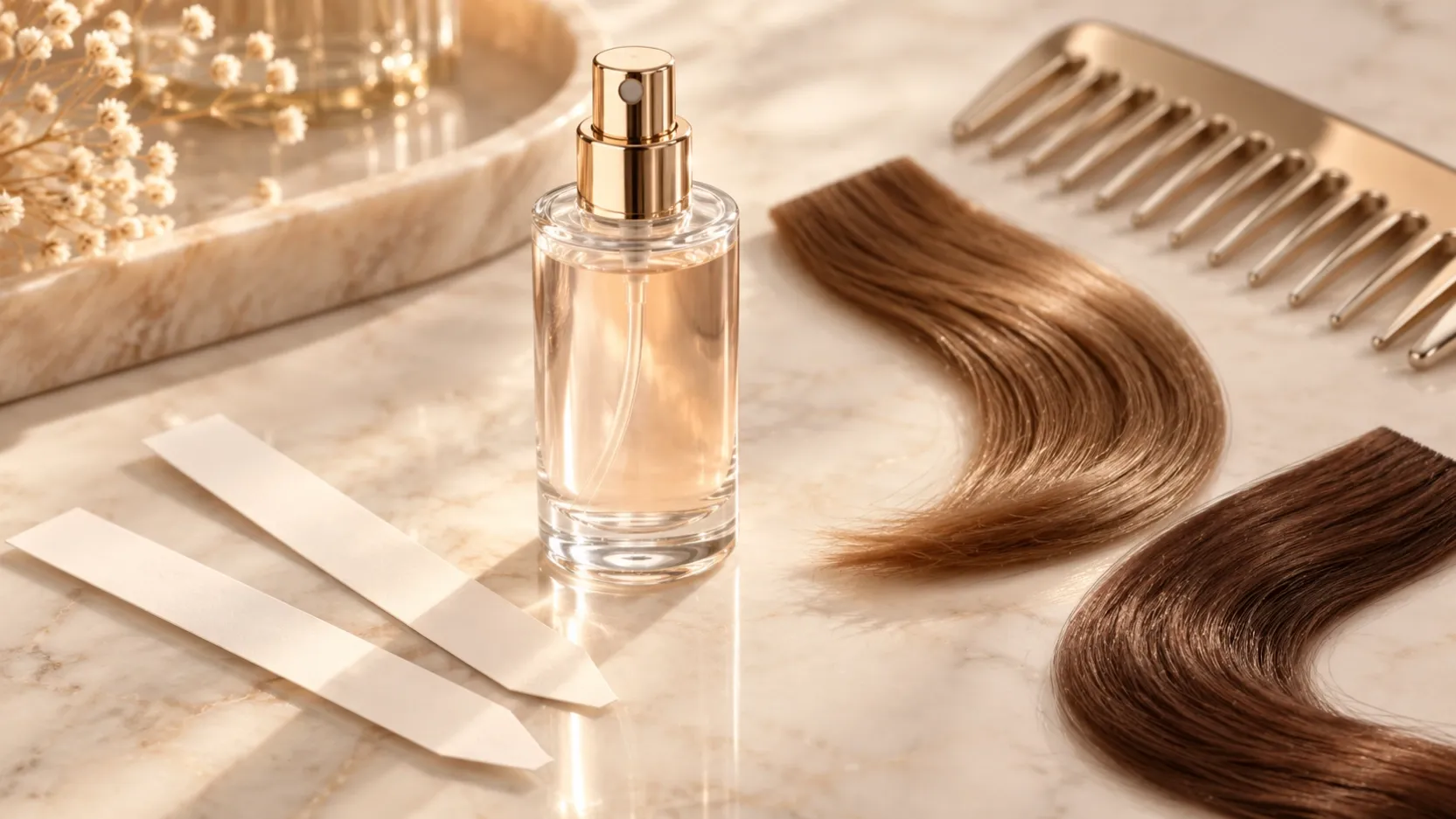
Evaluate a hair fragrance mist with separate scent and hair-feel scorecards. Use the intended pack, control the delivered dose and assess both immediately after application and after dry-down. A fragrance people enjoy on a blotter can still produce an unacceptable finish on hair.
A dated product signal, not transferable evidence
Soapbox announced alcohol-free hair fragrance finishing mists on 2 September 2026 (brand release, reviewed 3 October). This confirms the commercial format and the brand's positioning. It does not validate an OEM formula's moisturization, safety or protection claims.
Buyer inference: a scented finishing product could fit a professional aftercare range if the scent, finish and application are acceptable together. Treat that as a development question.
Write the benefit before choosing the ingredients
Is the primary benefit a pleasant scent, smoother-feeling lengths or a restyling finish? Rank these outcomes. A fragrance-only brief should not automatically acquire heat-protection, UV-protection or repair promises.
Describe the intended application zone: hair lengths, roots or both. Define dry or damp use, dose and application distance. Ask the manufacturer to confirm that formulation, testing and instructions fit that use.
Test the delivered spray
Measure output from repeated actuations and examine the spray pattern on a collection surface. Check drips, large droplets, uneven wetting and performance after the pack rests. Compare candidates in equivalent packs so that a better pump is not mistaken for a better formula.
If the product needs shaking, evaluate whether normal users follow that instruction and how quickly the phase distribution changes afterward.
Use two scorecards
| Scent scorecard | Hair-feel scorecard |
|---|---|
| Liking at the intended dose | Tack after the drying interval |
| Initial intensity | Comb drag relative to untreated hair |
| Character after dry-down | Strand separation and movement |
| Perceived intensity later | Root heaviness if roots are an intended zone |
| Compatibility with shampoo scent | Residue after repeated application |
Use coded samples and a consistent application method. Evaluate representative fine and thick hair if both are intended audiences. Decide beforehand which conditions and observation times matter. Suggested timing can include after dry-down and later in the intended wear period, but it must match the proposed claim.
Keep the rejection reasons visible
Ask evaluators to explain low scores. “Too sweet” suggests a scent adjustment. “Sticky once dry” suggests a formula or dose issue. “Wet patches” suggests a delivery or application issue. Do not collapse these into a single average that hides the reason for failure.
What should move to the next development stage?
Advance a sample only when it meets both acceptance rules. Then confirm formula stability, microbiological assessment where relevant, final-pack compatibility and the evidence needed for proposed claims. Request the scope and cost rather than assuming all tests are included in a sample quote.
Fragrance documentation should match the intended use and destination market. An alcohol-free description is not a substitute for evaluating the whole formula.
FAQ
Can fragrance blotters replace hair testing?
No. They help screen scent direction but cannot establish hair feel or residue.
Does alcohol-free mean a mist cannot feel heavy?
No. Evaluate the complete formula, delivered dose and application method.
Should a scented mist claim heat protection?
Only if the finished product has suitable evidence for that exact claim and use.
Related products and contact
Compare the 15-in-1 leave-in mist for an adjacent fine-mist development route. Explore the hair-care range to decide whether the new mist needs a standalone role.
Contact Junchun Cosmetic with your scent reference, intended hair types, application zone, target quantity and primary benefit. Request a sample plan with separate scent and finish criteria.