
Fine-Mist Hair Refreshers: How to Test Drying Time and Dark-Hair Residue
Test hair refresh mist samples for drying time, dark-hair residue, root feel and sprayer performance before approving a small private-label batch.
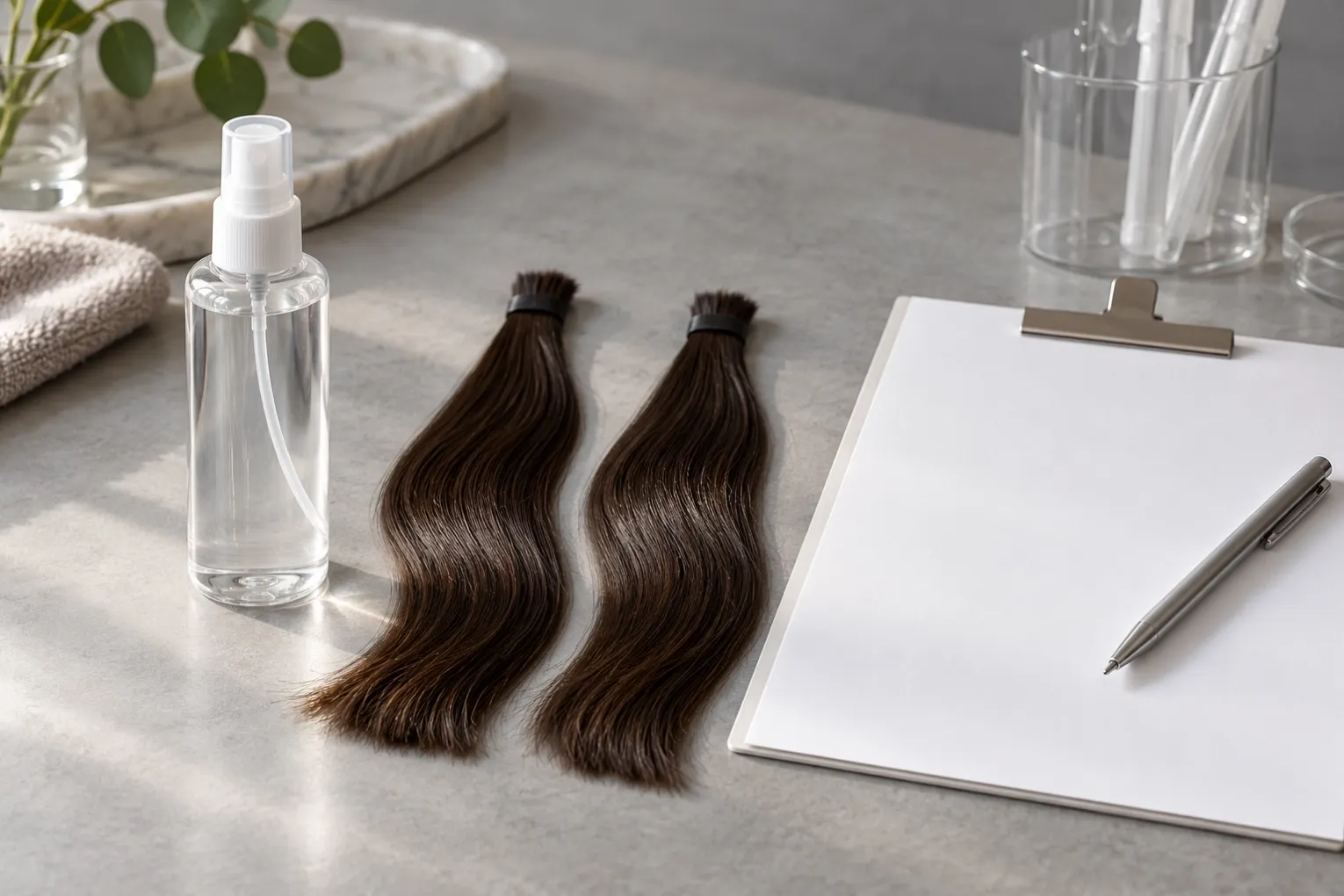
What makes a hair refresh mist suitable for a small-brand launch? It should perform its defined job at a repeatable dose without unacceptable wetness, residue or loss of style. Compare the finished formula through its actual production sprayer; fragrance appeal alone cannot prove oil control or cleansing.
Separate the product roles first
Cosmetics Business, 7 October 2026, highlights lighter dry-shampoo mists as an emerging direction. The opportunity remains a format hypothesis rather than verified demand for every market.
A fragrance mist adds scent. A restyling mist may help redistribute or soften a style. A powder-containing refresher may target oil-related appearance. These purposes can overlap, but each needs its own finished-product evidence. Do not rename a fragranced spray “dry shampoo” without substantiating the intended performance.
Use a repeatable sample-screening setup
This proposed method supports purchasing comparisons. It is not a validated standard or a substitute for safety and efficacy testing. Agree the actual directions and acceptable outcomes with the supplier before testing.
Step 1: Fix the dose and hair conditions
Use comparable dark-hair swatches and record hair length, treatment history, preparation and ambient conditions. Include an untreated comparison and, where appropriate, a relevant benchmark. Weigh the bottle before and after an agreed number of actuations to estimate delivered dose. Keep the spray distance and styling method consistent.
Step 2: Record drying and appearance separately
Define “dry” in advance: no visible wet patches and no unacceptable tack at the intended use stage. Record observations at the same time points for every sample. Capture consistent lighting and background photographs; avoid filters. Inspect visible residue both immediately and after brushing.
Step 3: Check repeated use
One successful application may conceal later buildup. Repeat the intended use schedule before the next wash and record root appearance, manageability, fragrance accumulation and wash-out effort. Do not use a swatch test to establish human scalp tolerance.
| Observation | Possible procurement question |
|---|---|
| Large wet patches | Is the dose too high or the sprayer producing an uneven pattern? |
| White specks on dark hair | Does the formula contain suspended material, and are shaking instructions adequate? |
| Style becomes flat | Does the chosen conditioning level suit the target hair type? |
| Clogging or inconsistent output | Is the final formula compatible with the nozzle and dispensing system? |
Choose the package after the formula role is clear
Compare priming, spray distribution, dose, leakage and cap security. Suspended ingredients may require special dispersion and sprayer work. A non-aerosol pack does not automatically mean a formula is non-flammable; request the appropriate transport information for the finished product.
For selected mature formulas with compatible stock bottles, a 100-piece route may be available. A new powder suspension, a different sprayer or a change in solvent system requires separate review. Keep customer-specific recipes out of the public brief.
FAQ
Does a hair fragrance mist absorb oil?
Not necessarily. Ask for evidence of the exact oil-related claim rather than inferring it from scent.
Can dark-hair swatches prove scalp safety?
No. Swatches assess appearance and styling response; finished-product safety needs a separate review.
Should I select the finest-looking spray?
Select a consistent dose and useful distribution together with formula compatibility. Appearance alone is insufficient.
Compare refresh and care options
Review the treatment-led leave-in spray and current hair-care formats. Request a refresh-mist sample review with the target use occasion, hair type, fill size, fragrance preference and quantity.