
Hair Steamer Mask OEM: How to Formulate for Heat-Cap and Steam Routines
Develop a deep-conditioning mask for steam and heat-cap routines with controlled viscosity, slip, heat stability and evidence-based claims.
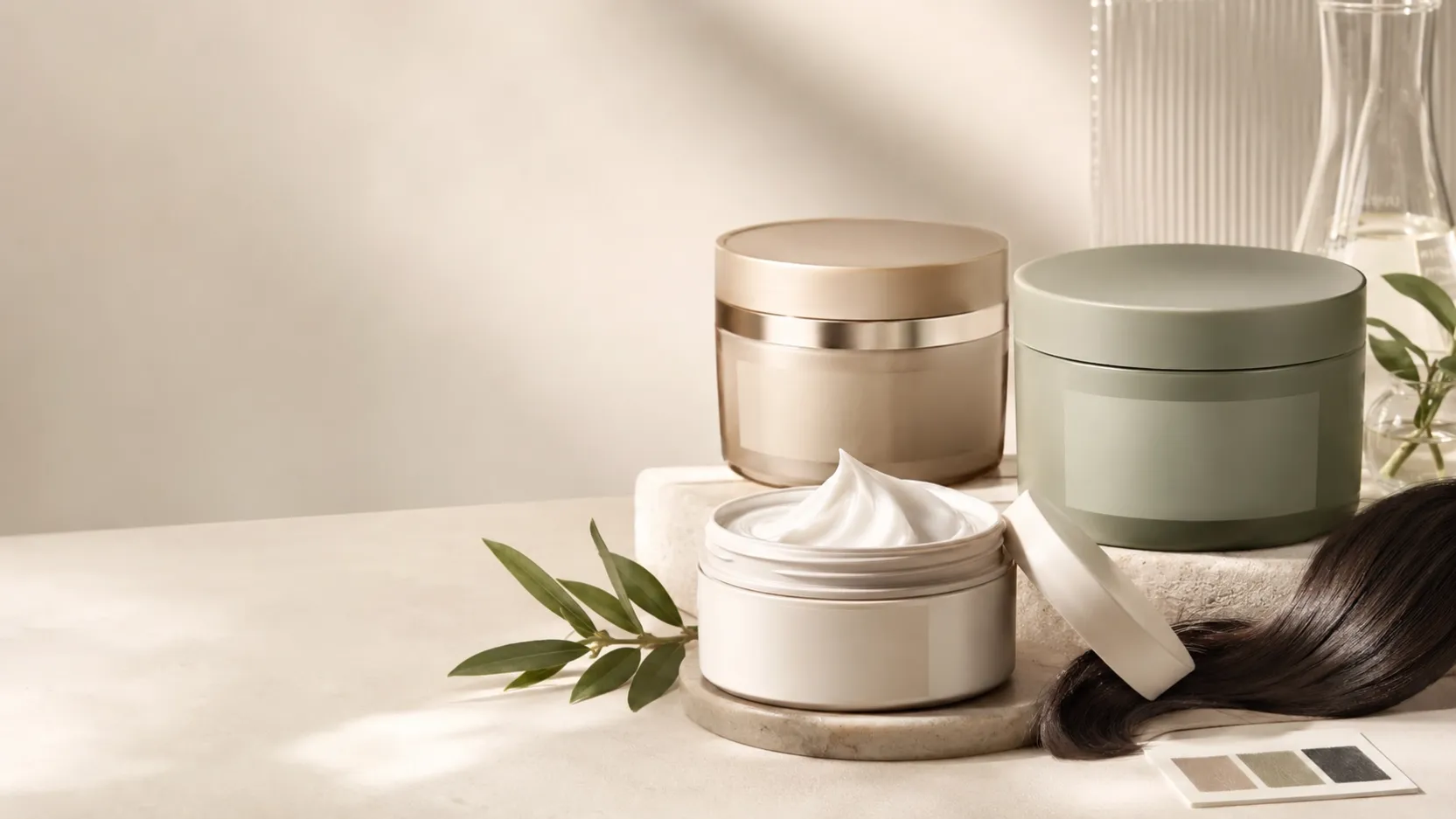
Hair steaming is moving beyond a salon add-on. September 2026 trend tracking reports rising searches for hair steamers and steam-hair routines, while L’Oréal Professionnel published a new explainer on steaming on September 8. For private-label brands, the opportunity is not simply to rename a standard mask “heat activated.” The formula, directions and package must remain stable and pleasant when consumers use a warm towel, thermal cap or hooded steamer.
Direct answer
A hair steamer mask should spread evenly on damp, sectioned hair, retain slip while warm, resist running onto the face or scalp and rinse without leaving heavy buildup. Gentle heat can change water movement, viscosity and the user’s perception of softness, but a cosmetic brand should not promise that steam permanently opens the cuticle or drives every active “deep inside” the fiber. Build claims around tested outcomes such as wet combing, softness, manageability and reduced breakage during grooming.
Define the routine before the formula
“Steam treatment” can mean several different use cases:
- Five to ten minutes under a warm towel.
- Ten to twenty minutes in an electric heat cap.
- A salon hood steamer with higher humidity.
- A shower-cap occlusion step without added heat.
Ask buyers to choose the principal method, maximum contact time and intended hair profile. A mask for fine, low-porosity hair should not have the same deposition level as one for bleached, coarse or tightly coiled hair.
Formula architecture
Conditioning system and slip
Cationic conditioning agents and fatty alcohols usually provide the core cream structure and combing slip. The system should keep working while the hair is warm and wet. Too little conditioning gives a treatment that feels impressive in the jar but drags during sectioning; too much may leave low-porosity or fine hair coated.
Humectants, emollients and proteins
Glycerin, betaine, panthenol and selected amino-acid concepts can support hydration and feel. Lightweight esters or oils can improve lubrication, while richer butters may suit coarse hair. Hydrolyzed proteins can support a strengthening story, but high deposition or repeated use may make some fibers feel stiff. The mask needs a use frequency, not just an ingredient list.
Heat and viscosity
Measure viscosity at room temperature and after controlled warming. A mask that thins sharply may run down the neck under a heat cap. Check emulsion stability, fragrance behavior, color drift and package compatibility after repeated heating and cooling. The consumer may store the jar in a humid bathroom, so microbial and in-use testing also matters.
Testing a steam-compatible mask
Warm-use stability
Expose filled packages and bulk samples to the intended temperature window rather than testing only conventional room-temperature use. Evaluate separation, odor, pH and viscosity recovery.
Half-head or tress comparison
Compare the mask with and without gentle heat using the same dose and contact time. This helps separate the effect of the formula from the ritual. Record wet-combing force, dry combing, softness, shine and residue.
Repeated-use assessment
A one-use panel may miss buildup. Test three to six uses on the intended fiber, including low-porosity, bleached and curly/coily tresses where relevant.
Safety directions
State that the product should be used with comfortably warm—not hot—equipment and according to the appliance maker’s instructions. Avoid recommending direct high heat, sleeping in an electric cap or applying a formula near electrical components.
Claims that match the evidence
Reasonable claims may include:
- Designed for warm-towel, heat-cap or salon-steam routines.
- Helps improve slip and manageability during deep conditioning.
- Leaves dry or textured hair feeling softer after rinsing.
- Helps reduce breakage caused by combing, when instrumentally tested.
Avoid “steam forces nutrients into the cortex,” “repairs every cuticle permanently” or “opens follicles.” The visible benefit comes from the complete formula, controlled routine and fiber condition—not heat language alone.
Package and kit options
A wide-neck jar is familiar but increases hand and water exposure. A tube or airless pump can improve hygiene, though very high viscosity may require a larger orifice. A premium kit can pair the mask with a reusable shower cap or non-electrical thermal cap, plus a sectioning comb. The accessory must have its own material and safety review; it should not become an untested medical or electrical claim.
FAQ
Does a hair steamer make a mask work better?
It may improve the treatment experience and water movement, but performance should be demonstrated by comparing controlled use with and without gentle heat.
Is this only for low-porosity hair?
No. Low-porosity consumers are interested in gentle heat, but damaged, curly, coily and coarse hair may also value slip and softness. The deposition level should match the target fiber.
Can the mask be called heat activated?
Only if testing shows a meaningful heat-related benefit. Otherwise, “designed for heat-cap and steam routines” is more accurate.
What contact time is suitable?
Many concepts use ten to twenty minutes, but the final direction should come from performance, safety and consumer-use testing.
OEM/ODM Project Planning
Review our product categories, compare OEM/ODM development routes, or contact our project team with your target market, product type, quantity, packaging direction and launch timing. Formula, packaging, MOQ, testing and documentation are confirmed for each project.