
Jun 26, 2026News & Insights
Keratin Treatment Cost Breakdown: How Salons and Distributors Actually Make Money
Keratin Treatment Cost Breakdown: How Salons and Distributors Actually Make Money 🟣 Let’s be clear: this is not about cost — it’s about margin When buyers ask about keratin treatment pricing, what
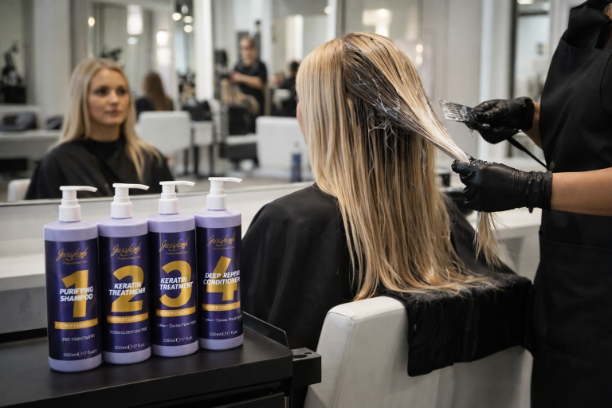
Keratin Treatment Cost Breakdown: How Salons and Distributors Actually Make Money
🟣 Let’s be clear: this is not about cost — it’s about margin
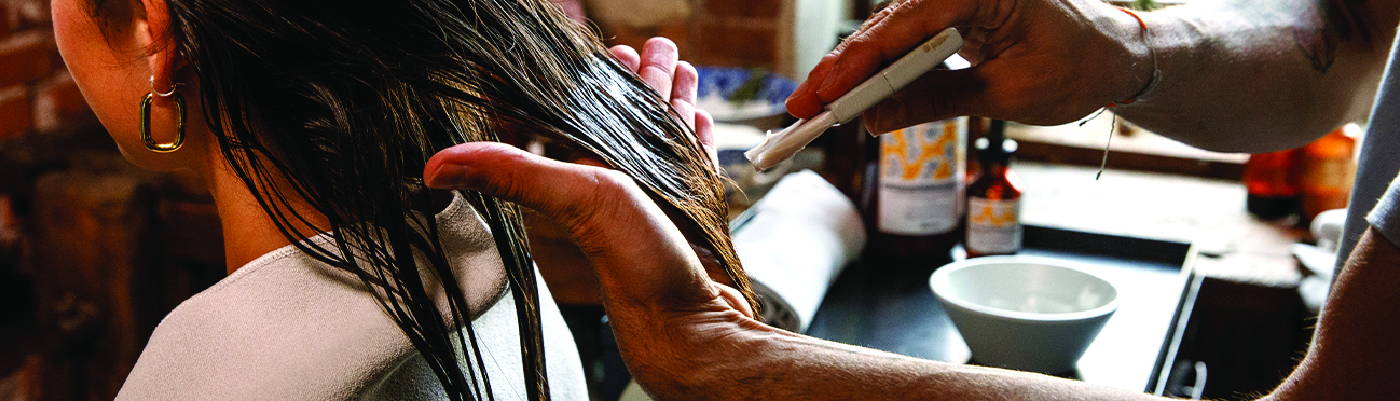

When buyers ask about keratin treatment pricing, what they usually mean is:
👉 “How much does it cost per set?”
But that’s the wrong starting point.
Because in real business:
👉 Cost doesn’t determine success — margin and repeat do
🟣 Step 1: Understand the real cost structure (not just product price)
Most people underestimate how simple this actually is.
For salons, the cost per service usually includes:
- Product usage (per treatment)
- Labor time
- Basic overhead
Example (typical structure):
- Product cost per service: $5–15
- Service price to customer: $40–120+
👉 The gap is where your business happens
🟣 Step 2: Why keratin treatments are high-margin by nature
This is why this category keeps growing.
✔ Visible transformation
Customers can clearly see:
- smoother hair
- less frizz
- better shine
👉 Easier to justify higher pricing
✔ Process-based service
Keratin is not “just applying a product”:
- multiple steps
- time involved
- professional handling
👉 Feels like a premium treatment
✔ Long-lasting result
Results last 8–12 weeks
👉 Customers accept higher upfront cost
🟣 Step 3: Why 4-step systems increase profit (not just results)
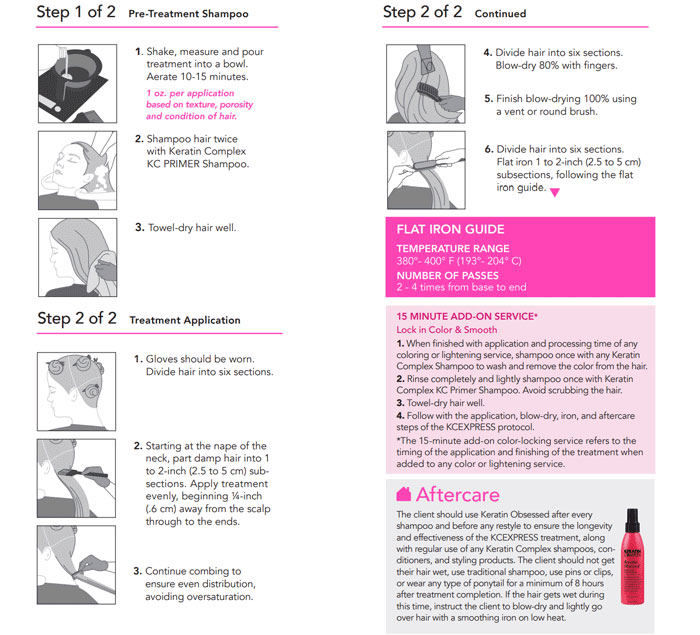

A lot of buyers think a system only improves performance.
But commercially, it does more than that.
✔ Higher service pricing
A “system” feels more professional than a single product
👉 Easier to sell as a premium package
✔ Built-in upsell
After treatment, clients need:
- anti-frizz shampoo
- repair conditioner
👉 Extra retail sales
✔ Repeat business
Because results are not permanent:
👉 customers come back
🟣 Step 4: Distributor perspective — where the profit really comes from
If you’re not a salon, your model is different.
Your profit is not per bottle
👉 It’s per distribution chain
Key drivers:
✔ Product positioning
If it solves a clear problem (frizz),
👉 easier to sell
✔ Price vs perceived value
Keratin products don’t need to be the cheapest
👉 they need to look “worth it”
✔ Reorder frequency
The real profit comes from:
👉 repeat orders, not first shipment
🟣 Step 5: What affects your pricing power (most people miss this)
Two suppliers can sell similar formulas, but results differ.
Why?
✔ Stability of results
If results vary:
👉 salons lose confidence
👉 reorders drop
✔ User experience
If there is:
- strong smell
- irritation
👉 product becomes harder to push
✔ Market fit
For example:
In dry climates:
👉 anti-frizz = high demand
👉 These factors directly affect how much you can charge
🟣 Step 6: Simple profit model (you can actually use)
Let’s simplify it.
For salons:
- Cost per service: low
- Selling price: high
- Frequency: every 2–3 months
👉 High margin + repeat
For distributors:
- Initial order: testing
- Reorder: where profit scales
- Expansion: more SKUs or markets
👉 Volume + repeat = real business
🟣 Step 7: Where most people lose money (important)
Not because of price.
❌ Choosing unstable products
→ leads to complaints
❌ Over-ordering too early
→ inventory pressure
❌ Selling without clear positioning
→ slow movement
👉 These are bigger risks than product cost
🟣 Step 8: What actually makes a keratin product “profitable”
After working with different markets, the pattern is clear.
A product becomes profitable when it:
✔ Shows visible results (easy to sell)
✔ Has low complaint risk (easy to scale)
✔ Fits the local problem (e.g. frizz in dry climates)
✔ Supports repeat purchase
👉 Not when it’s just “cheap”
🟣 Conclusion: Profit comes from repeat, not from saving $1
Keratin treatment is not a low-margin category.
But it’s also not automatic.
The difference between a product that “sells once” and one that builds a business is:
👉 consistency
👉 positioning
👉 repeatability
If you're evaluating keratin treatment products,
it’s worth looking beyond unit cost and focusing on how the product performs in real use.
We’ve seen how different setups impact salon pricing, distributor margins, and reorder rates — especially in dry-climate markets.
If you want, we can share:
- sample-based cost estimates
- low MOQ starting strategies
- and how buyers typically scale from first order to repeat business