Damp Hair or Dry Hair? Write Leave-In Directions Around the Approved Routine
Choose damp- or dry-hair leave-in directions through sample evaluation. Align dose, distribution and styling stage with the approved product.
Direct answer: Use the application stage supported by the approved formula and evaluation. Damp-hair styling prep and dry-hair finishing are different use cases; do not combine them on a label without checking both.
Test the intended main occasion
If the product is sold as styling prep, observe distribution on the hair state specified in the brief. Record towel drying, sectioning and amount. Vague “apply as needed” wording makes comparisons and customer guidance harder.
Evaluate an additional occasion separately
If dry-hair touch-up matters, repeat the assessment under that routine. Check visible coating and movement as well as the immediate spread. A sample selected for damp-hair use may not give the same finish when reapplied to dry lengths.
Make directions readable
Choose a primary routine and explain any assessed secondary use clearly. Avoid crowding a small label with incompatible instructions. Link fuller guidance from the product page while keeping the essential use and precautions on the approved label.
Make pump output part of the directions
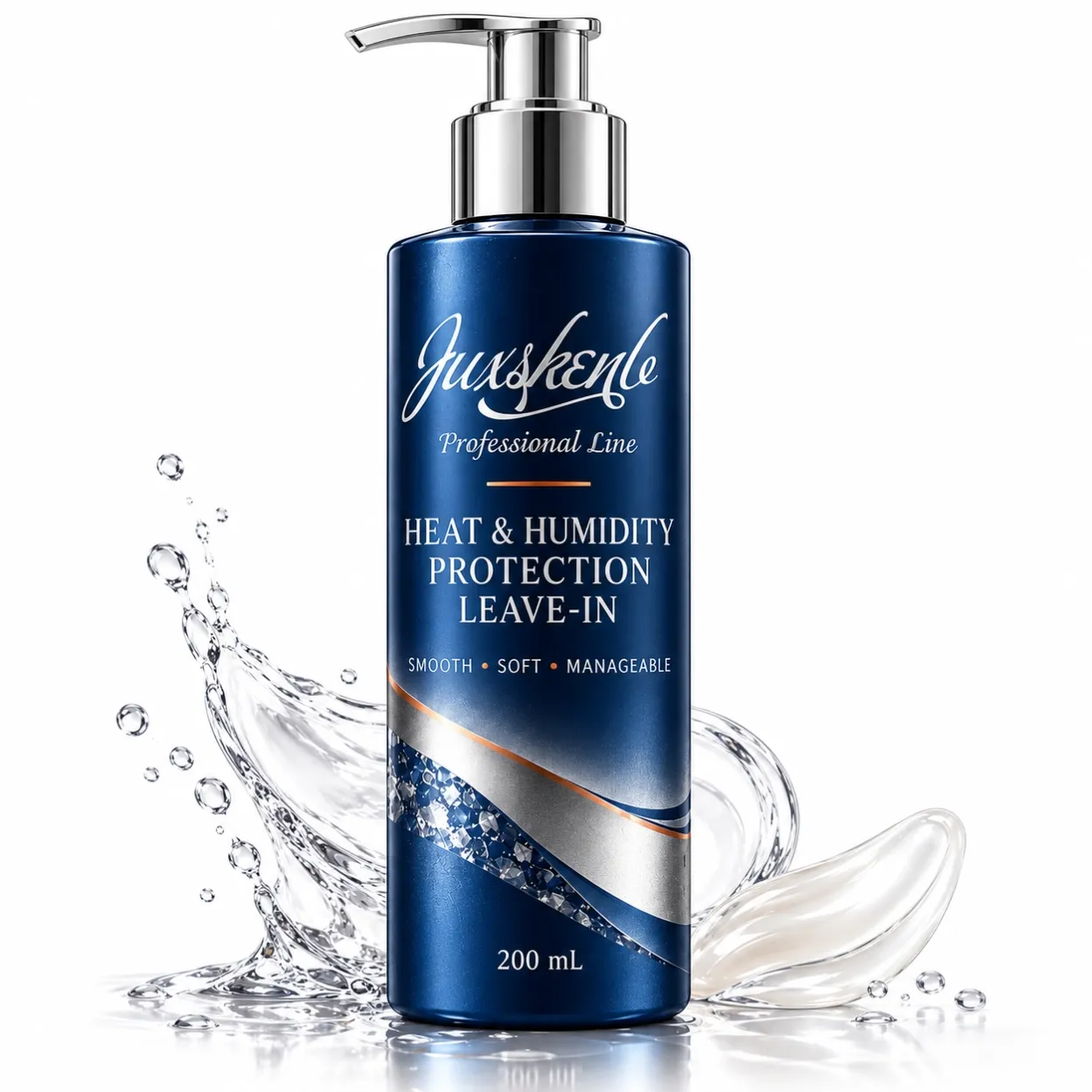
For the linked 200 ml pump leave-in, ask for the output of the actual selected pump and evaluate the intended hair section with that delivery amount. One pump from another bottle is not an equivalent dose. Start the sample discussion with hair length, density, damage history and styling routine; do not derive directions from the illustrated bottle capacity.
A practical two-routine comparison
Routine A is application to towel-dried lengths before the intended styling process. Routine B is a dry-length touch-up, only if that use is part of the approved brief. Record spread, detangling feel, dried appearance, tack and next-wash residue separately. These are proposed selection observations; final usage amount, application area and precautions follow the approved product specification.
Avoid turning use directions into a heat claim
Damp-hair or dry-hair compatibility does not by itself demonstrate heat protection. If the buyer wants a thermal claim, identify the appliance, treatment conditions and exact proposed wording, then obtain the relevant finished-product evidence. JunChun can discuss the formula, packaging and testing route; only supported claims should move to the product page or label.
A practical buying decision
| Decision point | What to request or compare |
|---|---|
| Primary use | State hair condition and application stage. |
| Secondary use | Assess it separately. |
| Final label | Match the approved instructions and formula. |
JunChun product and project options
Discuss the current formula, sample and packaging options with JunChun for your target market. Selected mature formulas with qualified stock packaging can start at 100 pieces per SKU. Packaging changes start from 500, subject to actual process minimums. Formula changes, specialist dispensers and printing require a project-specific review.
Frequently asked questions
Can every leave-in be used before any hot tool?
No. Confirm the intended use and supporting thermal-care evidence.
Does dry-hair use need the same amount?
Do not assume so. Develop directions from the relevant use assessment.
What should I include in a sample enquiry?
Send your primary application stage, hair condition and proposed label directions, destination country and planned quantity. Ask which current samples or development options fit those requirements.
Related products and manufacturing
Discuss your product brief
Send your primary application stage, hair condition and proposed label directions, destination country and planned quantity. Include the current benchmark or sample code so JunChun can compare the appropriate route. Request product options and a project review or email info@junchunbeauty.com.
Sources and scope
Reviewed 25 October 2026. Buying frameworks and screening steps are recommendations, not reported JunChun test results or guarantees of demand, compliance or performance.