
Lightweight Hydration or a Rich Hair Mask? Choose by Hair Response
Compare lightweight hydration sprays and rich hair masks by target hair, dose, residue and routine fit before selecting a low-MOQ private-label formula.
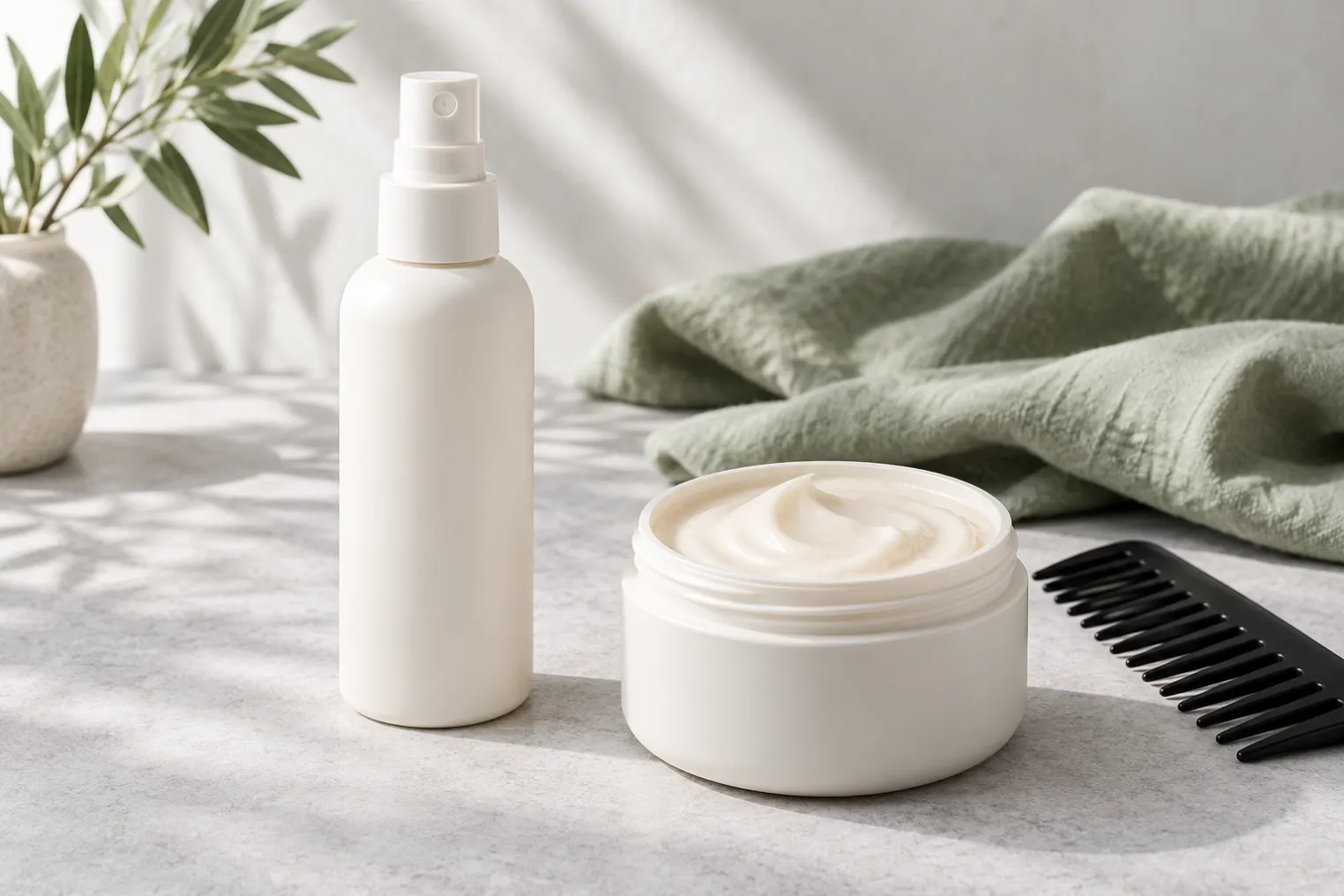
Should a buyer choose a lightweight spray or a rich hair mask? Choose the product that gives the target hair acceptable manageability at a practical dose without unwanted residue. A spray suits a leave-in use occasion; a mask suits a defined rinse-off step. Neither format is universally better.
A current signal, not a universal prescription
Goldwell’s Pure Hydration range, reviewed 11 October 2026, includes shampoo, conditioner and a 5-in-1 hydrating spray positioned around lightweight feel. This confirms a professional product direction, not its sales performance or a formula specification that another manufacturer may copy.
Compare the format against the routine
| Decision | Lightweight leave-in spray | Rinse-off mask |
|---|---|---|
| Application | Requires controlled spray dose and distribution | Requires a defined amount, contact time and rinse |
| Buyer screening | Dry feel, styling compatibility and repeat-use residue | Wet slip, rinse effort and dry finish |
| Package | Final sprayer must suit the formula | Jar, tube or pump must suit viscosity and use |
| Channel role | Convenient take-home care or restyling support | Wash-day treatment or salon service step |
Do not use hair-type labels as the whole brief
“Fine hair” and “textured hair” are starting descriptions, not complete formulation instructions. Record hair density, length, porosity-related condition, chemical-service history and styling routine. Ask whether customers complain about difficult combing, a rough finish or hair that feels coated. These problems lead to different sample choices.
Compare each sample at its intended dose
Use supplier-approved instructions and equivalent target-hair conditions. A mask should not be left in to imitate a spray. A leave-in should not be applied at mask dosage. Record the actual amount and assess the dry result after the usual styling process.
Look for repeat-use tradeoffs
Proposed buyer screening can include first-use slip, dry manageability, root appearance, tack and repeated-use buildup. This is a purchasing framework, not a standardized efficacy test. Confirm finished-product safety, stability and claims through a separate documented plan.
Ask for evidence that matches the label
If the brief includes heat protection, color retention or quantified breakage reduction, request the final-formula evidence, method and conditions. A hydrating ingredient does not establish those claims. Do not transfer a competitor’s temperature claim, patented technology or certification to an OEM concept.
Fragrance, package and formula modifications should be recorded as changes to the approved sample. A lighter scent does not make a formula fragrance-free, and a new bottle can change how much consumers dispense.
Make the first order a focused comparison
Choose one hero format that fits your channel before adding a companion. Selected mature formulas and compatible in-stock bottles may support 100 pieces per SKU. Custom pumps, printed bottles, new formulas and professional sizes need separate MOQ review. Confirm the whole delivered specification before printing the label.
FAQ
Does a richer texture mean better repair?
No. Richness is a sensory attribute; repair-related claims need appropriate evidence.
Can one product suit every hair type?
Only make broad suitability claims when the evidence supports the intended user groups and use directions.
Can I request samples of both formats?
Yes, sample scope and availability should be confirmed for your market and target hair.
Compare conditioning options
Explore the leave-in hair spray, anti-frizz conditioning system and hair-care catalog. Send your conditioning-product brief with hair condition, desired texture, package and quantity.