
Private-Label Hair Mask Samples: Compare Wet Slip and Dry Weight Before Ordering
Compare private-label hair mask samples at a controlled dose and rinse. Record wet detangling, dry weight and repeat-use feel before choosing a small OEM order.
Direct answer
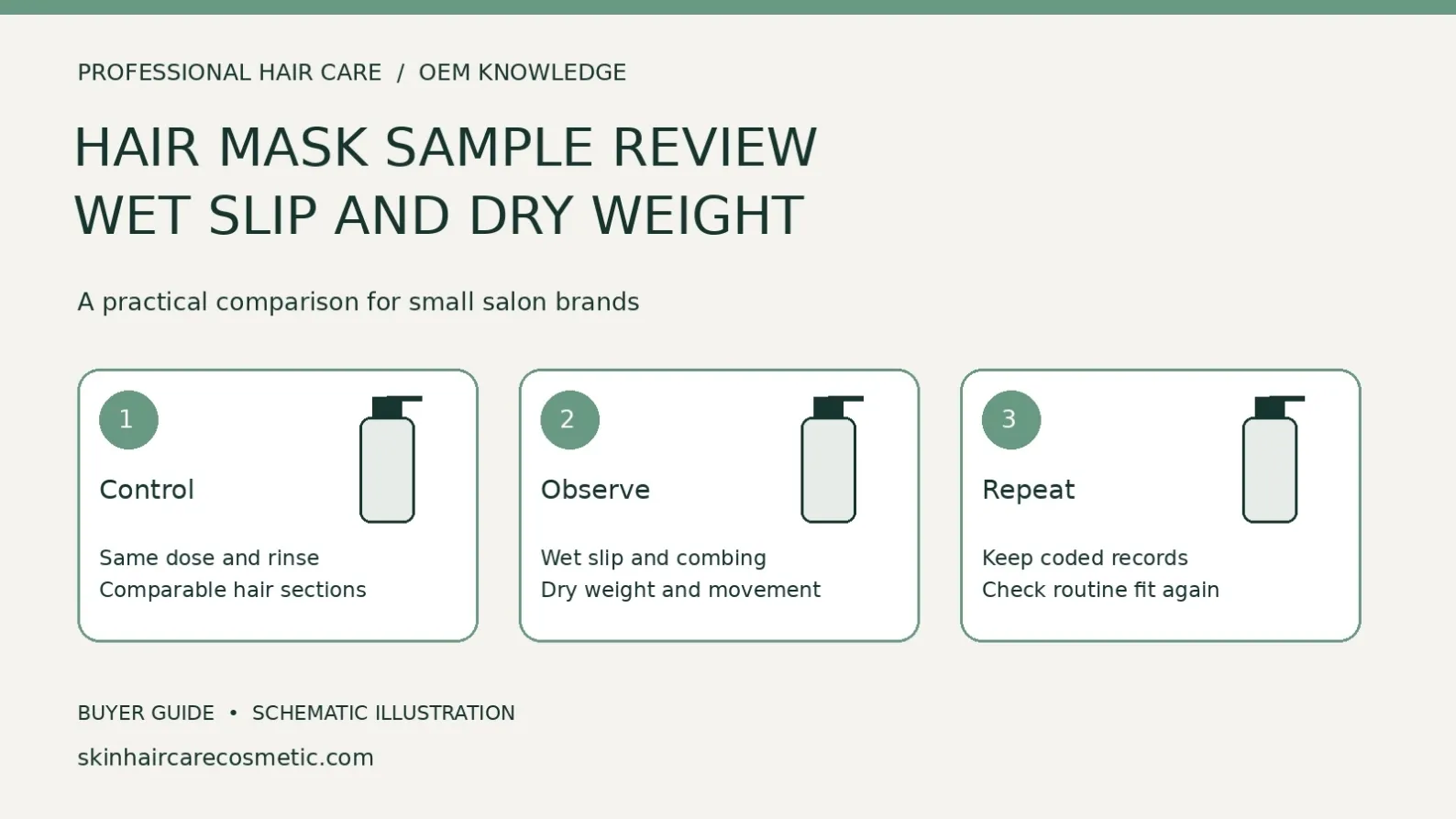
Compare hair mask samples on similar hair at a controlled dose, contact time and rinse procedure. Record wet slip separately from the dried result. A mask can feel easy to comb while wet yet leave a finish that your intended customers consider too heavy. Use the complete routine result to choose a sample, not jar thickness alone.
Why this knowledge matters now
Current professional hair-care sourcing encourages buyers to examine performance as well as ingredient stories. As background, the organizer's regional hair-care editorial, dated 16 June 2026 and rechecked on 8 October, discusses hydration and repair-oriented preferences. It is an editorial view, not a new October launch or audited demand forecast.
The testing framework below is a proposed purchasing screen. It does not establish a finished product's clinical effect, structural repair or performance percentage. Those claims require appropriate evidence on the exact formula and directions.
Define the mask's job first
A salon mask for porous, frequently styled lengths and a light retail mask for fine hair may need different finishes. State the intended user, application area, frequency and rinse instructions. Decide whether the mask replaces conditioner for that use or adds another step.
Give the supplier a target finish that can be observed: easier wet detangling, a soft dry feel or acceptable movement without a coated appearance. Avoid a brief built only around “maximum repair.” That phrase does not specify the mechanism, customer experience or evidence required.
Set up a comparison that can be repeated
Use coded samples and similar sections or matched hair tresses where possible. Note hair history, section size, pre-wash product and water conditions. A trained salon evaluator can run a practical screen; a laboratory should design instrumental or claim-support testing.
Use the supplier's intended directions as the starting point. For a comparison at a common dose, agree that dose in advance and document any difference from the final proposed label. Weigh the amount rather than judging it by a spoonful, and keep application and contact time consistent.
Separate four observation stages
| Stage | Record | Keep separate from |
|---|---|---|
| Application | Spread, section coverage and amount used | Jar thickness or fragrance preference |
| Wet handling | Comb resistance, snagging and perceived slip | Dry lightness |
| Rinsing | Effort, water conditions and residual coating | Claim of easier detangling |
| Dry result | Movement, fullness, rough feel and appearance | Immediate wet softness |
Photograph comparable sections under similar lighting. If you use a combing instrument, retain the method, replicates and comparison treatment; a salon score cannot be relabeled as an instrumental percentage.
Investigate a heavy finish before changing the formula
First check application amount and whether users put the mask on areas outside its intended use. Then check rinse consistency and accompanying leave-in products. A single heavy result can reflect the entire routine rather than the mask in isolation.
Compare the mask alone with the proposed routine after you have a baseline. Record whether hair length, porosity or styling history changes the preference. Do not average very different hair groups into a single “all hair types” result that hides dissatisfied users.
Repeat use according to the intended frequency and observe whether feel changes. A one-use preference does not prove long-term suitability. If the sample changes after a reformulation, repeat the affected comparisons; the old approval belongs to the old formula.
Connect the result to the order
Keep a retained approved sample and a written sensory specification. Include formula version, fragrance, pack, net content, directions and critical acceptance criteria. Confirm filled-pack stability, microbiological evaluation and transport checks with qualified teams; this sensory screen does not replace them.
Selected mature formulas using available stock bottles or jars may support 100-piece routes when confirmed. A new texture, fragrance or container can change development scope and minimum quantities. Choose the manageable trial route only after the mask's job and sample performance are clear.
Buyer FAQ
Is the thickest hair mask usually the best choice?
No. Thickness does not by itself establish detangling, lightness or suitability for the intended routine.
Can wet slip prove bond repair?
No. Wet handling is one observation. A bond-repair claim needs a defined mechanism and suitable finished-product evidence.
Should different hair types be combined into one score?
Keep group results visible. A single average may hide a poor fit for fine hair or a preference in more porous hair.
Can this comparison replace stability and safety work?
No. It is a purchasing screen. Qualified product-development teams must address stability, microbiology, packaging and applicable safety requirements.
Project discussion
Explore the catalogue and collection mask options as development references. Use Contact to share the intended hair group, routine, preferred pack and quantity. Ask for coded mature-formula samples and a practical evaluation plan before approving a small order.