
Professional Hair Care Outlook for Q4 2026: Three Signals Buyers Should Test
A cautious Q4 2026 professional hair-care outlook: scalp serums, versatile styling and service-to-retail treatment formats, with buyer tests.
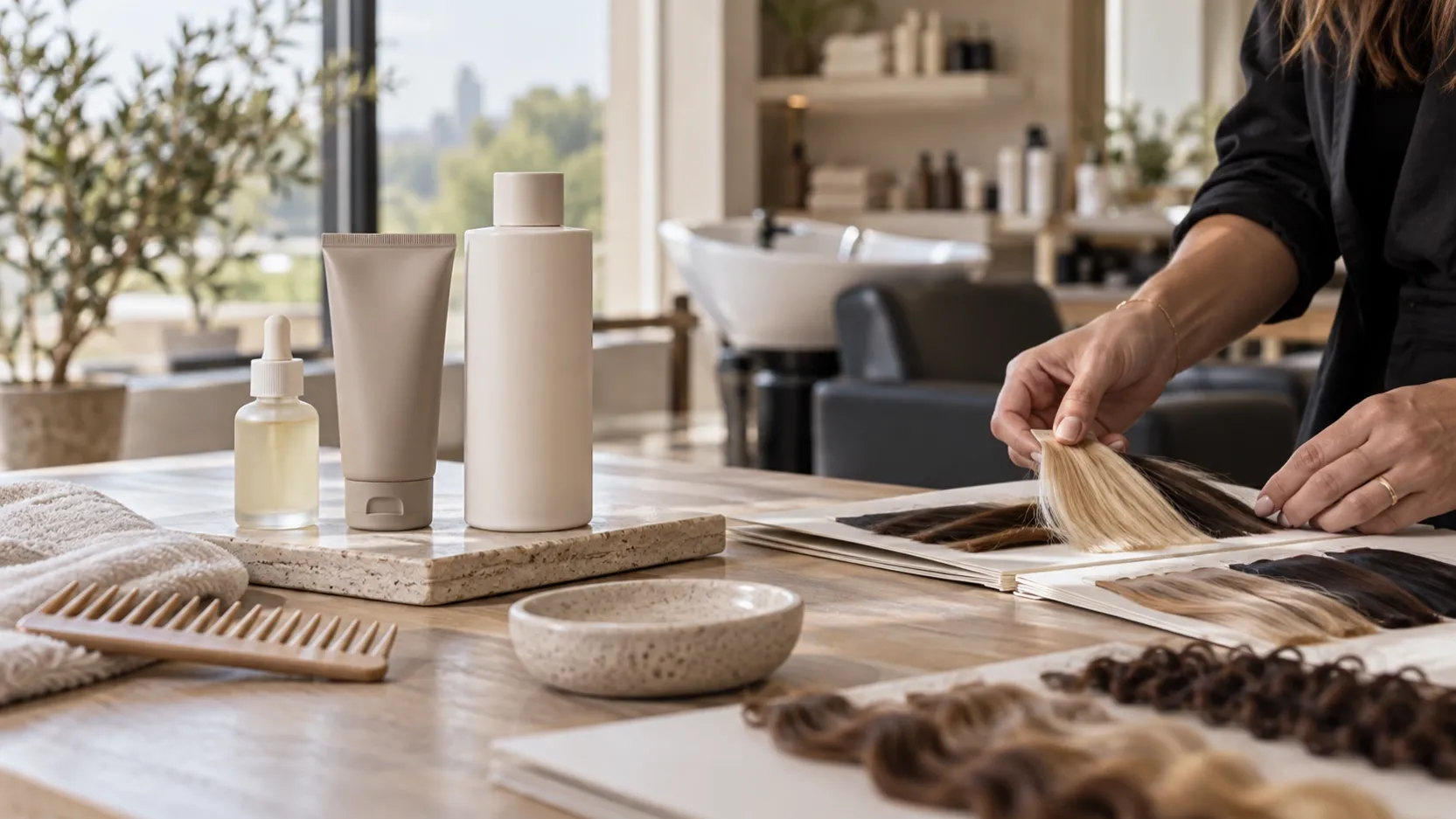
Direct answer: what should professional hair-care buyers watch in Q4 2026?
Watch three testable areas: scalp treatment routines with credible cosmetic claims, stylers that perform more than one clear job, and salon treatment formats that can be explained for home use. Treat these as product-development hypotheses, not a forecast of guaranteed sales. Sample one hero SKU per use case, verify performance on the intended consumer, and check reorder economics before broadening the range.
What has actually happened
In its August 11, 2026 US beauty release, Circana reported that first-half prestige hair-care dollar sales rose 11% and units rose 8%; hair serums grew nearly 60% in that measured channel. Its Canadian H1 2026 release reported strong hair-serum and daily-rinse shampoo/conditioner results in a different market. These are historical, channel-specific observations. Neither report predicts Q4 demand in the Middle East, Southeast Asia or any individual brand.
The September 17 Allure hair awards selected scalp products, a six-in-one curl cream and an air-dry styler. That is an editorial snapshot of formats being discussed, not a census of purchases. A September 16 K18 product article demonstrates a nighttime scalp routine; its proprietary claims should not be transferred to another product.
Outlook 1: scalp care will need a clearer evidence boundary
Inference: buyers may keep looking for scalp-first products, but regulatory and credibility pressure will favor narrower, testable cosmetic benefits. A small brand can compare a lightweight leave-on serum with a rinse-off scalp product. Its scorecard should include application time, residue, comfort, pack output and the exact claim evidence. Avoid implying treatment of hair loss or scalp disease from an ingredient trend.
Outlook 2: fewer, more legible styling steps may win the first trial
Inference: a versatile styler with one primary promise may be easier for salon staff and shoppers to explain than a shelf of overlapping creams. For a curl cream, test definition and touchability across textures. For an air-dry milk, test smoothness and movement without heat. Distinct hair types and climates may lead to different winners; the editorial selections above do not identify a universal formula.
Outlook 3: salon-to-retail translation remains a commercial filter
Inference: a fast salon treatment can create a repeat-purchase story only if the consumer dose, directions, pack and claims work outside the salon. Test service time, actual grams used, home rinse behavior and shelf readability. Distributors should calculate cost per use and replenishment timing rather than choosing a format solely because it is visually novel.
A 30-day buyer experiment
Select three concepts, recruit the intended hair-texture and channel panel, and give each product a written pass/fail threshold. Record sample preference, use errors, pack complaints and reorder intent separately. A promising result is a reason for a larger controlled pilot, not a market-size conclusion. Revisit this outlook after Q4 channel data is released.
FAQ
Do US and Canadian growth figures predict my local market?
No. They describe measured channels in those countries during H1 2026. Validate local pricing, retailers, salons and import conditions independently.
Should every brand launch a scalp serum?
No. Only if it solves a defined customer need and the finished product supports the intended claim and routine.
What is the first practical decision?
Choose one use case, one hero SKU and a test protocol before committing to an assortment.
Related reading and buyer route
For examples, compare the peptide rosemary scalp serum, curl defining cream and professional post-color mask. Buyers with a defined brief can contact Junchun Cosmetic with market, channel, target user and pilot quantity.