
Sep 18, 2026News & Insights
Professional vs Premium Hair Care Formulas: What OEM Buyers Are Actually Paying For
Compare professional and premium shampoo, conditioner, mask and leave-in formulas by active system, performance target, sensory quality, testing, packaging and cost.
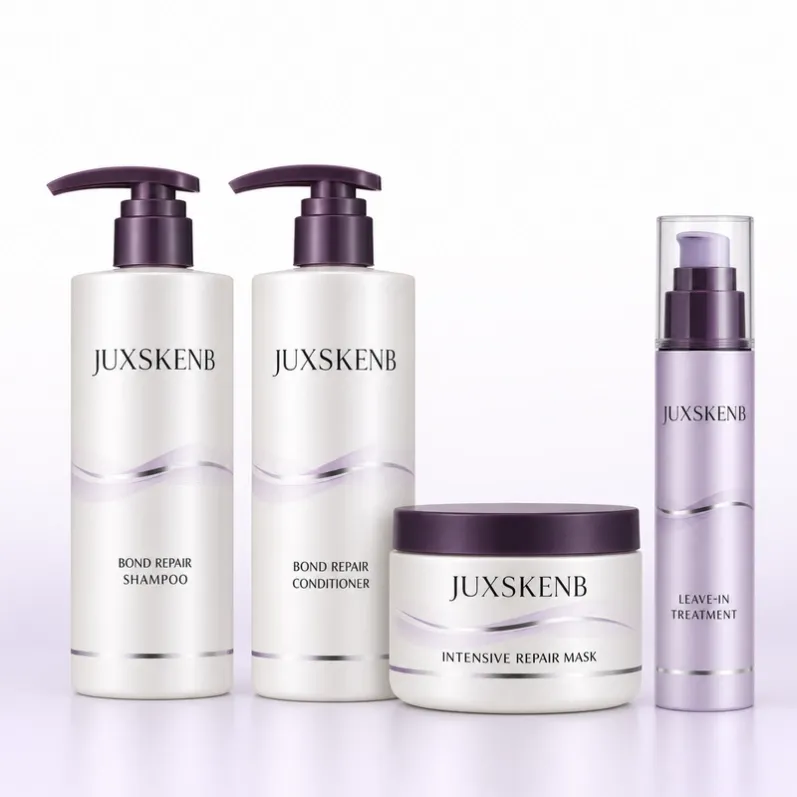
When buyers ask for a “premium” shampoo, conditioner, mask or leave-in, price alone does not define the upgrade. A meaningful premium version should show clear differences in active system, sensory target, performance testing, fragrance, packaging or documentation.
Direct answer: what makes a hair-care formula premium?
A premium formula normally combines a more specific performance target with higher-cost or better-supported ingredients, improved texture and fragrance, stronger package presentation and a more detailed validation plan. The upgrade should be visible in the specification and sample results, not created by changing only the product name.
1. Start with the same four-product system
Compare formulas within a consistent routine: repair and hydration shampoo, smoothing conditioner, deep repair mask and anti-frizz leave-in. This helps the buyer understand which improvements belong to each step instead of loading every claim into one product.
A coordinated system also makes salon testing and retail storytelling easier. See our private-label four-step hair-care set as a planning reference.
2. Professional shampoo: cleansing plus manageable feel
A professional shampoo should clean effectively while supporting the intended hair type and service routine. Premium upgrades may include a more refined surfactant blend, targeted conditioning polymers, amino acids, proteins or scalp-comfort ingredients where technically appropriate.
The buyer should compare foam, rinse speed, wet combing, after-wash feel, fragrance and compatibility with color-treated or chemically processed hair.
3. Premium conditioner: slip without unnecessary weight
Conditioner quality is strongly influenced by the conditioning system, fatty alcohol structure, emulsion feel and deposition on hair. A premium version may provide faster detangling, smoother rinse feel and a softer dry finish while reducing heavy coating.
Evaluate it on fine, thick, curly and chemically treated samples if the range targets several hair types.
4. Deep repair mask: richer is not always better
A mask can feel thick in the jar but still perform poorly on hair. Premium development should focus on spread, wet slip, rinse feel, softness, shine and repeat-use residue. Ceramides, amino acids, hydrolyzed proteins, oils or bond-support concepts may be considered according to the formula route.
For salon and retail planning, our 300ml and 1000ml hair-repair pair illustrates how one care story can serve two channels.
5. Leave-in treatment: performance must survive styling
A premium leave-in should be judged after air-drying and heat styling where relevant. Buyers can compare detangling, frizz control, shine, softness, movement, residue and next-day feel.
Heat-protection wording requires an evidence plan. The presence of silicone, protein or panthenol does not automatically prove a specific protection level.
6. Ingredient level and supplier evidence drive cost
Price differences can come from raw-material quality, active use levels, imported or branded ingredients, fragrance, preservation strategy, manufacturing process, testing and package selection. A long INCI list is not proof of higher performance.
Ask the supplier to explain the role of each major upgrade and how it will be evaluated in the finished product.
7. Packaging can cost more than the formula upgrade
Stock bottles with customized labels allow a smaller market test. Directly printed or specially decorated bottles often require a packaging supplier minimum of about 2,500 units per SKU or more, depending on bottle and process. Custom molds and complex decorations require higher commitments.
Buyers should compare formula and packaging as separate quotation lines so they can see where the budget is changing.
8. Use side-by-side sample evaluation
Test professional and premium versions under the same conditions. Use equal product amounts, the same hair samples and the same drying method. Record wet slip, dry combing, softness, shine, frizz, weight, fragrance and next-wash feel.
A scoring sheet is more useful than asking testers which sample “feels expensive.”
9. Understand MOQ and development route
MOQ starts from 100 pcs per SKU for selected stable formulas using in-stock bottles. Custom formulas, colors, fragrances, and packaging are quoted based on project requirements.
A premium stable formula may still use a low-MOQ stock bottle. However, custom active levels, exclusive fragrance, special testing or printed packaging can increase formula, packaging and production minimums independently.
10. Documents and claims should match the selected version
Before production, confirm the final INCI, product specification, packaging, directions, warnings, batch coding and available COA or SDS/MSDS documentation. Stability, microbiological, compatibility and claim-support requirements depend on the formula and destination market.
Buyer FAQ
Is the premium version always better for every customer?
No. A lighter professional formula may be more suitable for frequent use or fine hair. The correct version depends on the target market and sensory preference.
How much more does a premium formula cost?
There is no fixed percentage. The difference depends on active levels, raw-material suppliers, fragrance, testing, batch size and packaging.
Can buyers test both versions before choosing?
Yes. Side-by-side samples are the best way to compare performance and decide whether the premium upgrade creates enough commercial value.
Can 100 pieces use direct-printed bottles?
Usually not. A 100-piece project is better suited to in-stock bottles with labels; printing commonly requires about 2,500 bottles per SKU or more.
Pay for an upgrade the customer can feel
Premium positioning is strongest when the buyer can explain and demonstrate the difference. Contact our OEM/ODM team to compare professional and premium formula routes, samples, packaging and MOQ.