
Rinse-Off Hair Mask OEM: Compare Benefits After a Fixed Rinse
Compare rinse-off hair mask OEM samples with fixed dose, contact time and rinse conditions. Assess wet handling and dry finish before choosing a formula.
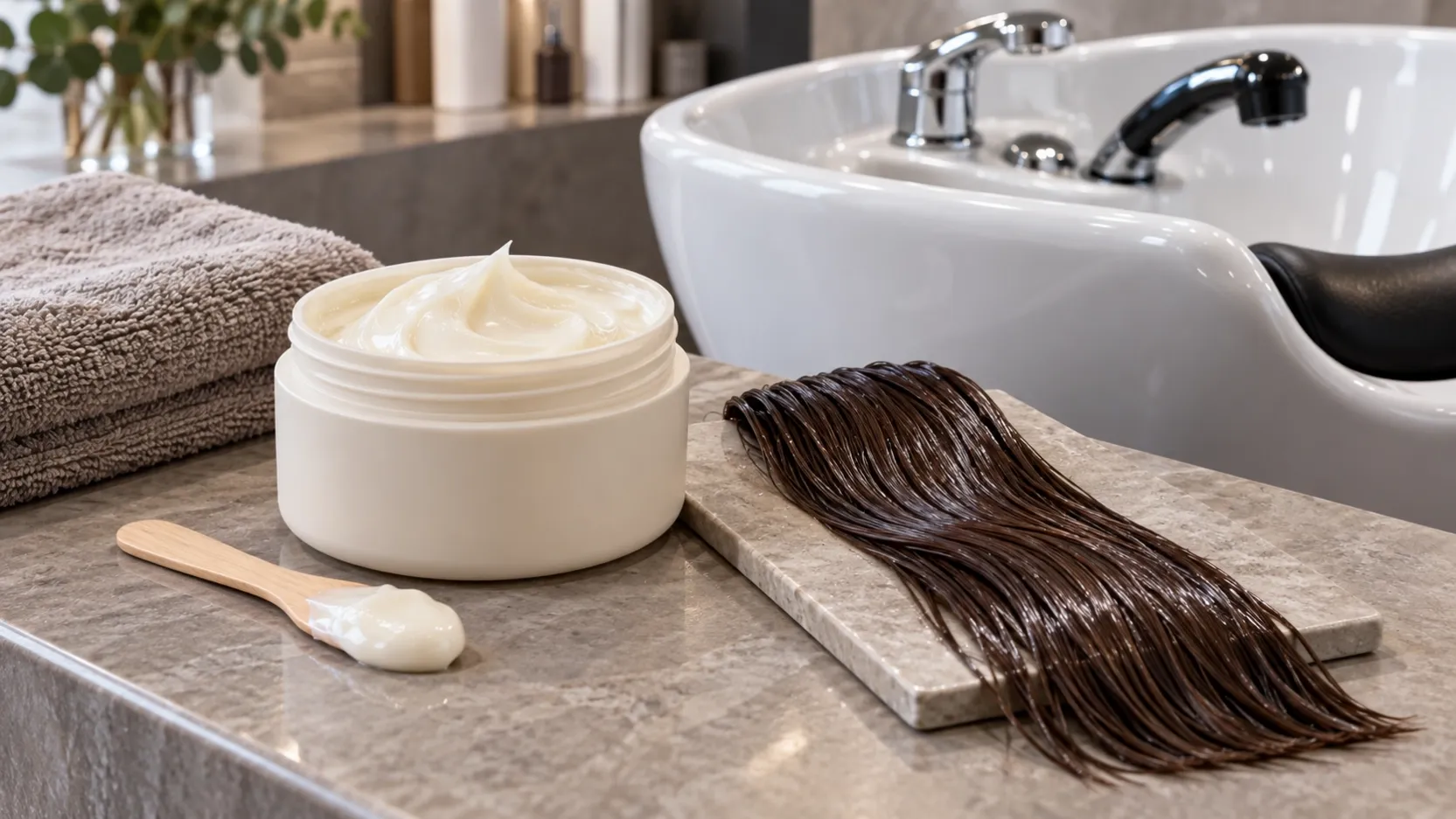
Compare hair masks using the same dose, contact time and rinse conditions, then assess wet handling and the dry finish separately. A rich texture in the jar is not sufficient evidence that the product delivers a desirable result after the instructed rinse.
Why revisit the rinse step now?
Soulstice's September 1, 2026 launch included Buttersilk Restorative Mask. The product's inclusion is a recent treatment-format signal, not proof that a richer mask is better for every professional range. Source: official launch release.
Editorial inference: when buyers receive several treatment concepts, controlling the rinse makes comparisons more useful than judging fragrance and texture alone. The following is a proposed sample-screening method, not an established universal standard.
Prepare a comparison that another assessor can repeat
Record the hair source, texture, treatment history and tress dimensions. Choose a baseline cleansing routine and use it consistently. A sample used on heavily processed hair should not be compared with a benchmark used on untreated hair.
Set the dose relative to the hair quantity. Write down how the assessor distributes the mask, how long it remains on the hair, and whether excess water is removed before application.
Fix the rinse variables
Specify water temperature, flow or volume, duration and handling. Use controlled conditions for the first screen. Later, add realistic salon or household variation as a separate robustness check.
Do not quietly rinse one candidate longer because it feels heavier. That may be a meaningful usability observation, but changing the procedure makes the primary comparison harder to interpret.
Score wet and dry outcomes separately
| Stage | Questions to answer | What to avoid |
|---|---|---|
| Application | Is distribution practical at the agreed dose? | Approving only jar texture |
| After rinse | How does standardized wet handling compare? | Assuming slip proves structural repair |
| After drying | Is the finish acceptable for the target group? | Changing the styling routine |
| Next wash | Is there an unwanted residue concern? | Inferring long-term effects from one use |
Keep sensory comments separate from instrument measurements. If a claim needs a measured endpoint, ask the testing provider for a suitable method and justified replication.
Use a relevant routine benchmark
Compare with the product buyers already supply or the routine the new mask is intended to replace. If the concept is an occasional intensive treatment, do not judge it solely against a daily conditioner without considering use frequency.
Run more than one independent preparation. Blind sample identity when practical and retain an agreed scorecard. A consistent moderate improvement can be more useful than an exceptional result that cannot be repeated.
When a candidate fails, determine whether the issue is dose, distribution, rinsing effort or dry finish. This diagnosis gives the formulator a concrete revision brief.
Turn findings into a procurement decision
Before sampling, agree which outcomes are essential and which are desirable. For a professional backbar mask, manageable rinsing time may be a key requirement. For retail, clear directions and an easy-to-reproduce result may carry more weight.
Approve the finished formula with the actual instructions and pack. Include closure cleanliness, product removal near empty and ease of measuring a useful dose. A texture adjustment made after testing needs review because the approved sample no longer represents the supplied formula.
Use qualified wording that matches the assessment. Softness, combability and visible finish are different outcomes from breakage or structural repair; do not collapse them into one broad promise.
FAQ
Is a thicker mask always more effective?
No. Evaluate the result after use. Thickness is a texture characteristic, not a performance result.
Should the test use a longer contact time than the label?
The main assessment should represent the intended directions. A longer contact time can be a separate development condition.
Can one mask serve fine and coarse hair?
Possibly, but assess the intended groups separately and check whether dose instructions are practical for both.
Related products and Contact
Compare the rosemary and mint deep-conditioning mask with the professional acidic post-color mask as different development directions.
Contact the OEM team with your target hair group, benchmark, desired rinse time, pack size and quantity. Request a sample comparison using one shared procedure before approving the formula.