
Scalp Care in 2026: What Beauty Brands Should Validate Before Launching the Next Routine
Evaluate scalp-care launch signals through product roles, user instructions, sample evidence and repeat-use feedback before committing to a private-label range.
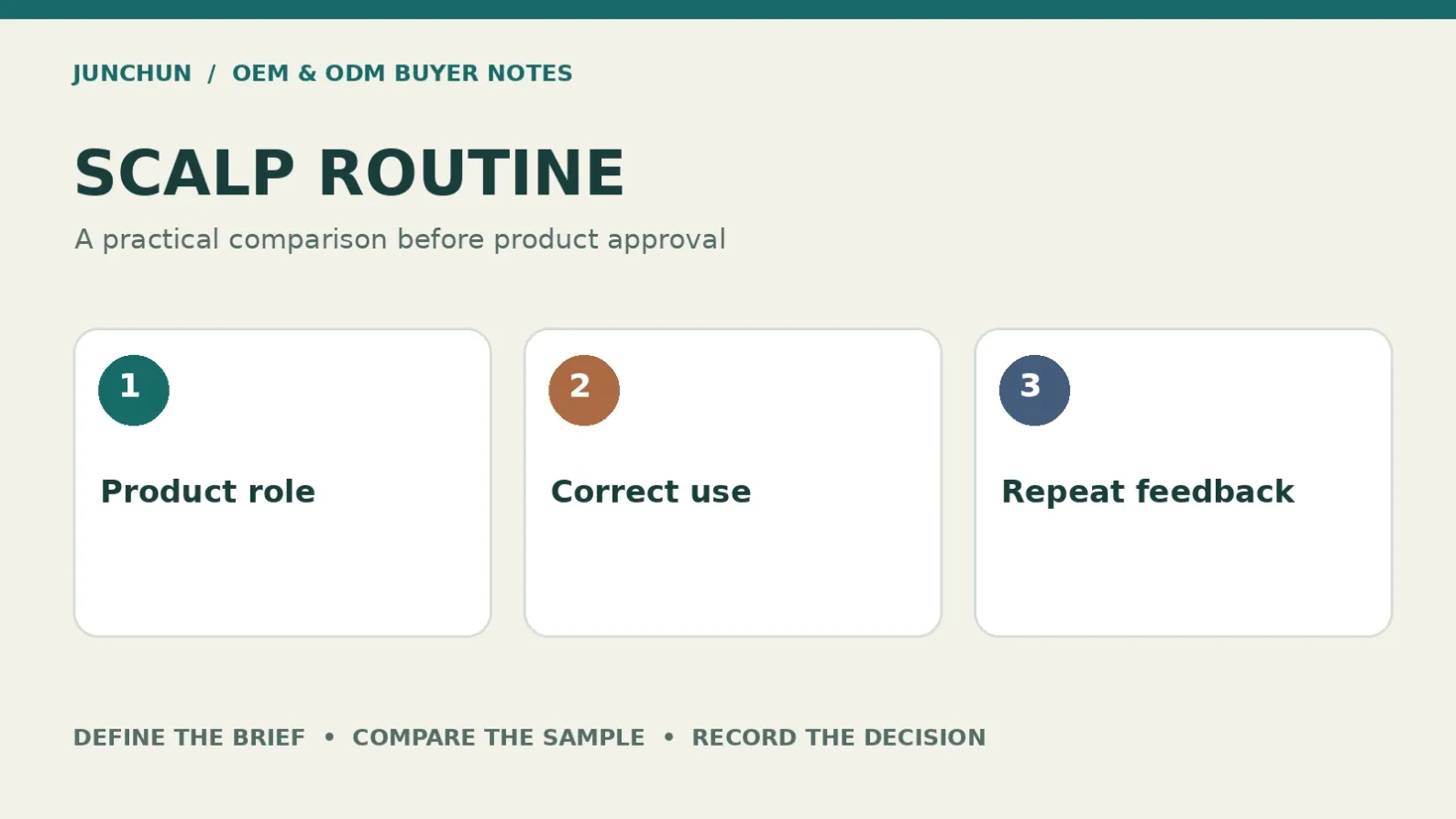
Before launching a scalp-care routine, validate whether customers can select the right product, apply it correctly and describe a useful result. A visible category launch can justify investigation; it cannot establish demand for your own formula, price or channel.
What has happened, and what remains uncertain
On 15 October 2026, a Head & Shoulders company announcement described a new scalp-care collection organized around three different scalp needs. The announcement presents a brand-specific launch and company claims. It does not measure demand for independent private-label brands. Our outlook is that clearer product selection and instruction may become useful points of differentiation. The size and profitability of that opportunity in a buyer’s market remain uncertain.
Validate the explanation before adding another SKU
Write a one-sentence job for every proposed product: cleansing during washing, a defined rinse-off step, or between-wash cosmetic care. Give the draft labels to intended users without a sales explanation. Ask them to identify the application zone, sequence and rinse requirement. Record misunderstandings rather than correcting the label verbally and treating the test as a success. A routine that needs repeated explanation may need simpler names or fewer steps.
Separate correct use from product performance
Use approved samples and directions. First record whether the user can reach the intended scalp area without excessive hair wetting or drips. Then assess the agreed sensory targets, such as dry-down and root residue. Keep instructions consistent between samples. A useful consumer opinion does not establish a clinical claim, and an ingredient study does not automatically substantiate the finished product. Specify the claim and its matching evidence before printing artwork.
Build a practical launch decision
Create a log with sample code, use conditions, misunderstanding, sensory feedback and purchase objection. Decide in advance which failures require a label revision, a dispensing change or a formula review. Conduct another check after the revision. For a commercial pilot, record actual orders and reorders separately from social reactions. Avoid projecting sales from a small convenience sample. Begin with the product whose role users understand most clearly, then assess whether a second step solves a different problem.
Choose an order route that matches the evidence
Selected mature formulas with eligible stock bottles may start at 100 pieces per SKU. Packaging changes start from 500 pieces per SKU, subject to component and process confirmation; custom formulas require a separate production review. Ask for product, artwork, freight and documentation costs separately. The education check should happen before committing to a coordinated printed range.
Buyer FAQ
Does a major brand launch prove my market is growing?
No. It is evidence of that company’s activity. Local sales, customer research and reorder behavior are needed for your own decision.
Should every scalp product use the same instructions?
No. State the approved application zone, amount, sequence and rinse requirement for each finished formula.
What should a first inquiry include?
Market, channel, intended user, product role, pack, quantity and the claims you want to support.
References and project links
- Company launch announcement, 15 October 2026; company claims only
- 100 ml scalp refresh mist
- Discuss samples and specifications
Send your target market, sales channel, product requirements, packaging and quantity to info@junchunbeauty.com for a project-specific sample and quotation review.