Oct 12, 2026News & Insights
Stock-Bottle Hair Care: Differentiate a 100-Piece Launch Without a New Mold
Differentiate a 100-piece hair-care launch through clear product roles, stock-bottle choices and honest label design before investing in custom tooling.
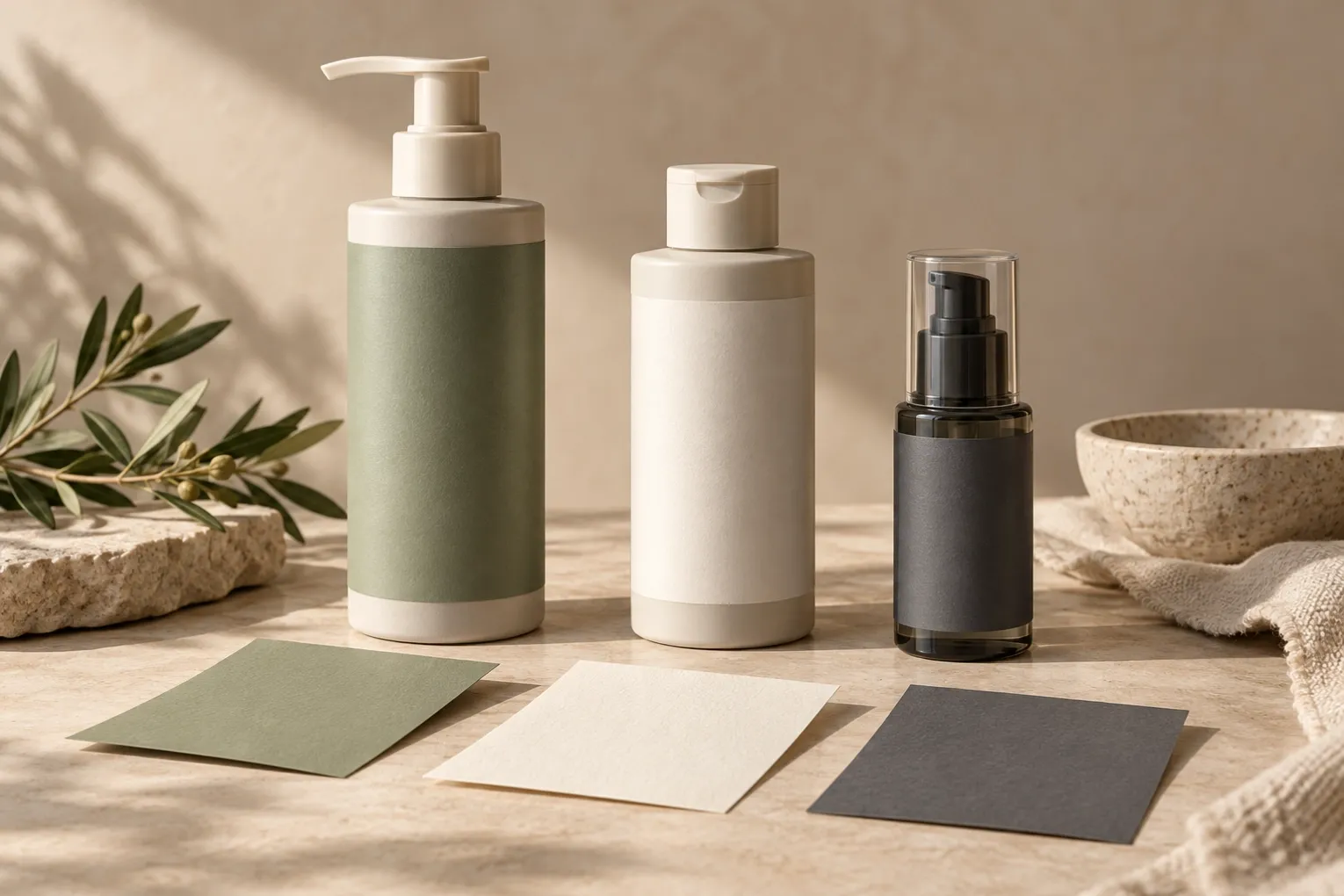
A small hair-care brand can differentiate a stock-bottle launch through the product job, sensory experience, label hierarchy and confirmed dispenser options. A new mold is not essential. At 100 pieces, use an eligible mature formula and available packaging; separate true customization from decoration and avoid exclusivity claims without an agreement.
Why differentiation needs more than a new name
Vogue's 5 October 2026 innovation commentary described consumer criticism of highly similar packaging and launches. It is a qualitative signal about perceived sameness, not proof of declining sales. Read the dated commentary.
Our purchasing recommendation is to identify a meaningful reason for the new product before choosing bottle colors. A finishing serum for fine hair and a rich pre-wash oil can share a bottle family while serving different routines. Two products with the same formula, directions and experience need more than different label names to justify separate links.
Start with a one-sentence product role
State who uses the product, when it is used and the expected cosmetic outcome. For example, a controlled-dose finishing serum for lengths and ends is easier to evaluate than a generic luxury hair treatment with many unsupported benefits.
Compare the proposed role with the products already in the brand's range. If the role overlaps, consider improving the existing page, instructions or packaging rather than increasing the SKU count.
Separate packaging decisions into three levels
Level one: available bottle and closure
Ask for current component photographs, dimensions, neck finish, closure specification and available quantities. Confirm the complete combination, not just the bottle. A familiar bottle shape does not establish which pumps fit or perform reliably.
Level two: decoration and label design
Use a readable front hierarchy: product type, routine step and size. Put detailed directions and verified ingredient information where the buyer can read them. Waterproof labeling, print adhesion and durability should be checked with the actual container and use environment.
Distinctive design can come from typography, spacing, approved artwork and a consistent routine system. Do not imitate another brand's logo, graphics or recognizable trade dress.
Level three: custom components
Custom colors, finishes, caps or molds introduce separate supplier minimums and development requirements. Confirm whether the quote covers each component and the decoration method. A 100-piece mature-formula route does not automatically include these processes.
Make the formula experience consistent with the pack
A light serum should dispense a controllable amount rather than a large lotion-sized dose. A thick treatment must remain recoverable through the selected closure. Test dispensing, leakage and formula compatibility before approving artwork.
Keep the formula code, container code and approved label version in one purchasing record. A packaging image is a concept until actual components and specifications are confirmed.
Approve a distinctive product without overclaiming
Ask four questions: does the SKU add a use occasion; does the sample meet the intended experience; can the package be supplied at the quoted quantity; and can the consumer understand the directions? If one answer is missing, resolve it before placing the first order.
The selected mature-formula and stock-packaging route may start at 100 pieces per SKU. Eligibility depends on the exact product and components. Avoid calling common stock packaging exclusive or describing an existing base as a proprietary invention.
Frequently asked questions
Can a stock bottle still support a premium brand?
Yes. Readable design, consistent product roles and a reliable dispenser can support a premium presentation. The final outcome depends on the approved product and artwork.
Can every bottle color be supplied at 100 pieces?
No. Available stock colors and custom color production are different routes with separate minimums.
Does a label change make an existing formula a new product?
It changes branding. A distinct new SKU should have a clear role or meaningful specification difference.
When is a custom mold justified?
When the functional or commercial benefit supports its tooling cost, component minimums and repeat-order plan. Obtain a project quotation before committing.
Related products and OEM capabilities
Discuss your project
Send a stock-packaging launch brief with the product role, target market, quantity, bottle reference and decoration preference. Ask which options qualify for the mature-formula route.
Sources and evidence notes
Vogue: Does Beauty Need to Reinvest in Innovation? — Published 5 October 2026. Industry commentary and social reactions, not sales evidence; the launch controversy began before this publication week.